Showing posts with label environment. Show all posts

Wednesday, September 2, 2009

My Year of Hopefulness - Jane Goodall

Tonight I went to 92Y to hear Jane Goodall, one of the people I admire most. Today she released a new book, Hope for Animals and Their Endangered World. It's been 49 years since Jane began her landmark study about chimpanzees in the Gombe National Park. She was a 26 year old woman, had never attended university, grew up in a family with very few financial resources, and attempted to document the intimate details of the lives of these animals when she had no formal training on how to do this work. I read one of her many previous book, Reason for Hope, about 10 years ago. Tonight she seemed even more hopeful about the fate of the world and our ability to reverse so much of the damage we've done.

Jane writes, speaks, and works for hope. "Without hope, there's no action," she said. "My job is to give people hope." And in the next breathe she talked about the rapid melting of the ice caps and the immense negative impact we've had on our planet in a few short decades. Some times, like all of us, she loses heart and becomes overwhelmed with all that we have to do to improve the world.

"So in the face of all that's negative in the world," Howard Gardner, the moderator asked, "how can you remain so hopeful?"

"Well, there are several simple reasons," Jane said:

1.) We have amazing brains that are very good at problem-solving, and they get even sharper when we have our backs against the wall and we need to solve a seemingly impossible problem. Individuals take action. In England, just today, there is a program that started called 10 10. It's aim is for individuals and companies to reduce their carbon footprint by 10% in 2010. I'd like to see that spread and become a worldwide effort.

2.) Nature is resilient. If we give it time, it grows back.

3.) Young people have so much courage. Take the Roots & Shoots program we have. It is about young people getting together and taking action to do amazing things in the world.

4.) The human spirit is indomitable. Look at Nelson Mandela. 17 years in hard labor prisons, and he comes out still able to forgive.

I found her hope contagious. She has spent her entire life planting seeds within people she meets, encouraging them to action, and setting an example for the extraordinary things we can all do with our lives. Most of all, I was touched an inspired by her approach to her work and her life. She always approaches everything from a place of love. Her one dream in her life was to work with animals. A very simple cause that live in the heart, not the head. She spent so much time with the chimps in Gombe National Park because she loved them, not because they were some scientific experiment. She cared deeply about their welfare, and wanted to share their story with others.

I've always looked to Jane as an activist, as someone with a lot of courage and confidence, who braved the world of science for our benefit. What I did not realize until tonight is what a strong example she is for young women. When she was 11, she dreamed of traveling to Africa and working with animals there. Her school friends laughed at her, and yet the strong women who comprised her household encouraged her to dream as big as she good and then go after those dreams. In her work with animals, she's made all of us more human. She's connected us to create a global community of deeply committed, concerned participants.

After an extensive Q&A session, Howard Gardner took one more audience question: "Jane, how do you reconcile science and religion?" She sighed slightly and closed with a brilliant line that will ring in my head for days to come. "I wish we would stop worrying about how we came to and come together to figure out how we're going to get our of this mess we've gotten ourselves into." Jane's been trying to figure this out for a long time - she's dedicated her life to this cause - and it's about time we all join her.

To learn more about the Jane Goodall Institute (JGI), click here. In 2010, a new movie, Jane's Journey, will be released. It chronicles Jane's remarkable life and career.

The photo above depicts Jane Goodall and is taken her the JGI website.

Sunday, August 9, 2009

My Year of Hopefulness - Freedom to Think Bigger

"If your life's work can be accomplished in your lifetime, then you aren't thinking big enough."
~ Wes Jackson

My errands today took longer to accomplish than I had planned. By the time I finished them all, without having had coffee, breakfast, or lunch, I was ready to eat just about anything edible that came into my line of vision. I popped in to Chipotle, wolfed down my burrito bowl, and saw on my drink cup that the restaurant is running a multi-part series entitled "People We're Pleased to Know". Part 5 features Wes Jackson, the founder and President of The Land Institute and a leader in the sustainable agriculture movement.

Wes's quote above lifted a huge weight off my shoulders. I've been thinking a lot about accomplishment lately. In my writing, at work, with my multiple side projects that I've been working on. Secretly I've been a little frustrated with myself - why are these things taking so long? Why am I not checking them off the list in rapid succession? His quote reminded me that ideas with passion and heart take time to develop and even more time to execute. The bigger the dream, the longer the time horizon.

This isn't to say that there aren't smaller dreams embedded into the larger vision we have for our lives. There are triumphs, and inevitably defeats, along the way that contribute to a lifetime of work. His life's work was not to start The Land Institute. The Land Institute is a vehicle to help him realize a vision of our world developing a robust, healthy system to feed itself in perpetuity without destroying our planet.

Think of how Wes's perspective frees up our creative energy and encourages us to include others in the process of building our dreams. He is shaping his vision and bringing it to life alongside many others who share his same aspirations, and those aspirations take constant care, concern, and commitment. His vision is bigger than the span of his own lifetime - it actually continues on indefinitely. Failure and success are taken out of the equation with a mission that big - all it requires is that we contribute to steady, forward progress.

Saturday, July 4, 2009

My Year of Hopefulness - Love is all around us

Yesterday my friend, Ken, called me with an incredible story that's too good to keep to myself. Last Fall he lost his mom to a terminal respiratory disease that she had managed for a number of years. Ken was very close to his mom and he's a rough go of it for the past 6 months. One of his friends gave him a gift certificate to a nearby greenhouse and nursery so he could buy a tree in honor of his mom to plant in his yard.

When Ken was a teenager, Evita had just opened on Broadway and the song "Don't Cry for Me Argentina" was the mot popular song around. Ken's mom used to crack herself up by changing up the words to "Don't cry for me Sargent Tina..." She'd sing that all the time, making everyone around her laugh.

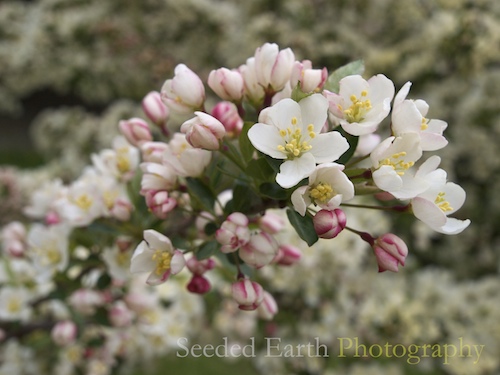
Ken was at the nursery yesterday with a friend, choosing a tree to honor his mom. They were specifically looking for a crabapple tree because of their beautiful flowers and found one they really liked. Variety: the Sargent Tina Crabapple. Maybe a coincidence...

Ken and his friend, Linda, get back to Ken's house and plant the tree in the yard. They place the last shovelful of dirt around the tree and head back inside the house. Just as they get into the house, the song Hold Me Kiss Me Thrill Me was on the radio. That song was the only song Ken's mother requested for her memorial service when she and Ken were choosing the music while his mom was in hospice. Coincidence, I think not...

Losing people is hard, though experiences like Ken's remind me that we don't ever lose the ones we love. They just cross over, and they'll be there when we cross over, too. We'll be with them again, and while it's hard to accept that they don't exist in the form in which we knew them and loved them, their love is still very much a part of our lives, always. Their love is truly all around us.

The photo above depicts the blossoms of a Sargent Tina Crabapple and is from http://farm3.static.flickr.com/2072/3534629428_bef4ba6e37.jpg?v=0.

Tuesday, June 30, 2009

NY Business Strategies Examiner.com: Interview with Gennaro Brooks-Church, Founder of Eco Brooklyn

As I was searching online for interesting Green entrepreneurs, I stumbled upon the site for Eco Brooklyn, a company devoted to educating and helping the New York community build greener co-ops and Brownstones. Eco Brooklyn is a social enterprise not just for its Green philosophy; they also make Green building education courses part of their core value proposition.

I had the opportunity to interview Gennaro Brooks-Church, founder of Eco Brooklyn. His inspirational story is one that illustrates that many times entrepreneurship chooses the entrepreneur rather than the other way around! In addition to the interview, there is also a slide show attached that shows Eco Brooklyn's work.

To read the full interview, please visit: http://www.examiner.com/examiner/x-2901-NY-Business-Strategies-Examiner~y2009m6d30-Interview-with-Gennaro-BrooksChurch-Founder-of-Eco-Brooklyn

NY Business Strategies Examiner.com: A look at Adam Werbach's book, Strategy for Sustainability


Adam Werbach wrote a short piece for this month's issue of Fast Company. In the article he outlines nature's ten simple rules for survival. They apply not only to nature, but companies as well. I've listed the principles below and added some commentary on how each applies to our day-to-day working lives, specifically focusing on entrepreneurship.

To read the full article, please visit: http://www.examiner.com/examiner/x-2901-NY-Business-Strategies-Examiner~y2009m6d30-Natures-10-simple-rules-for-survival--a-look-at-Adam-Werbachs-Strategy-for-Sustainability

Monday, May 11, 2009

My Year of Hopefulness - Stay on Path

At the Brooklyn Botanic Garden yesterday, Mom and I kept seeing these small wooden signs that said simply "Please Stay on Path". As we talked about my life and career, we considered what my path might be and how I can shape it to encompass all of my interests and passions. We thought about all the different ways that we get distracted, what causes us to lose focus, and how we can regain our bearings.

Staying on path at the garden is much easier than it is in life. It's easy to lose direction, to veer off our course, some times without even realizing exactly how it happened. Some opportunity seemed like something we wanted to follow or we had an experience that made us consider a different way forward. Sometimes these side trips are life changing for the better and sometimes our interest in these new pursuit fades as quickly as it appeared.

And then there's the question of flexibility. We get new information all of the time and we want to make sure that we have enough flexibility to incorporate the relevant info into our plans. Think of it like our bones. We want our bodies to be flexible, though the strength of our bone structure makes all of our activities possible. Without the rigidity of our bones, we'd never go anywhere! A life road map provides the same kind support.

I've found very often that I make much better life choices when I am running toward something and not away from something. It's the difference between looking forward and looking back, and making choices depending upon which of these actions has more say in our decisions. I like a good balance of both. I want to be informed by my past and not ruled by it. I want to be hopeful and excited about my future without sacrificing the wonderful things about the present.

There's nothing that says a path has to be a straight shot. Mom and I wound through the Brooklyn Botanic Garden, explored the different routes, and trusted in a healthy dose of meandering. Our map helped to make sure that we didn't miss things we really wanted to see and that we headed only down roads that interested us. We had our priorities of what we wanted to see, things that would be fun if we had time, and things that we'd prefer to skip. And we took time to smell the flowers along the way. We enjoyed being surprised by things around the bend. We let our senses guide us on some adventures to things we had missed on the map. It's a beautiful metaphor for how to live life.

Friday, May 1, 2009

My Year of Hopefulness - What Honeybees Teach Us About Business

In this current economy, the key is flexibility. Easier said than done, so I have gone looking for examples of successful work flexibility beyond the borders of business school books and analyst reports. My favorite find so far was in today's New York Times in the Opinion column "The Wild Side" about evolutionary biology. The guest columnist, Leon Kreitzman, wrote "Let's Hear it for the Bees", about the remarkable career example that honeybees set for us.

The whole article is a fascinating read. Here are the key points I found most relative to business:

1.) Do the work that needs to be done. Honeybees have an amazing sense to know when a task needs attendance and when a task would be wasted effort. Their sense of efficiency and innate to ability to always make themselves useful is enviable.

2.) Different stages of life call for different types of work. While very young, honeybees care for eggs while older honeybees with be charged to forage for nectar and pollen. And if need be, they'll flip back to tasks they have done before. It's a good lesson in gathering knowledge from the ground up so that it can be called upon when necessary. They don't get stuck seeing themselves in specific roles. Their jobs evolve as they gain experience.

3.) Communication and generosity are keys to a healthy hive. Honeybees are in constant communication with one another. Foragers let each other know where they've found strong supplies of nectar and pollen. They assist one another in a way that brings the saying "many hands make light work" to life. They don't build fiefdoms or silos - they work for the benefit of the hive as a whole.

4.) Awareness of our surroundings and external circumstances inform the actions of our lives. Foraging bees only visit flowers when nectar and pollen counts are at their highest. They do this by synchronizing their internal clocks with a daily floral rhythms of flowers they've visited. This assures that their trips to the flowers are as beneficial as possible, and that they spend other times of their day on more useful activities.

We spend a lot of time buried in paper work at our desks. There is currently a lack of inspiration around the gray cubicles of America. I've been finding that I garner the most motivation by looking outside of business, into areas like science, health, and art. There are teachers and sources of education all around us if only we take the time to look and appreciate the knowledge they have to offer.

The above photo was taken by Kathy Keatley Garvey, University of California, Davis Department of Entomology

Sunday, February 22, 2009

My Year of Hopefulness - Monterey Bay Aquarium

I make a habit of visiting baseball parks and aquariums across the country. When I used to manage theatre tours, I would make a point of seeing as many stadiums and aquariums as I could in the different cities we traveled to. I have to say that Baltimore is tough to beat in both of those departments - I saw Shark Week at that aquarium and those hotdogs at Camden Yards are the best I've ever had.

Being in Northern California this weekend, I wanted to see the Monterey Bay Aquarium. I have heard about it since my fundraising days at Conservation International. Monterey - you're no Baltimore or Atlanta, though I learned some fascinating things while I was there this morning. They had a few octopi that I were entrancing. Did you know that octopi change their color according to the color of the surface they are crawling or resting on? Incredible. In Boston, they had an octopus who was bored in his own tank, so he found a way to sneak out of his tank at night, when everyone had go home, and would make his way to the lobster, eat his fill, and then get back home before the first staff members arrive. They only way they caught him was by video camera.

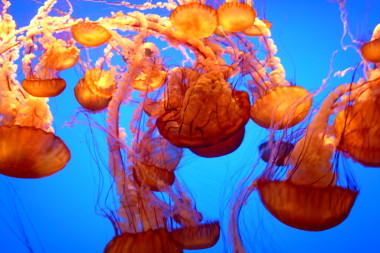
The jellyfish exhibit left me breathless. They had these gorgeous, bright orange jellyfish in front of a brilliant blue background. I could have stood there for hours to watch them float through their environment. It was a reminder to me that there are so many mysteries left in this world. There's still so much more to explore, to see, and to know. We haven't even scratched the surface - there are entire worlds underwater, canyons deeper and wider than the Grand Canyon, mountains taller than Everest. It is too much to fathom - we couldn't possibly take it all in

70% of our planet is covered by water so if you ever feel life is too much for you to bear on dry land, I encourage you to go under the sea. Or at least get to your nearest aquarium. It will give you hope by showing you what's possible.

The photo above can be found at: http://justinsomnia.org/images/monterey-aquarium-orange-jellyfish.jpg

Thursday, February 5, 2009

My Year of Hopefulness - Winter Cocoons

My friend, Monika, was telling me about her recent spell of wanting to remain on her couch as much as possible. Though she likes the winter weather, this season she's felt the need to hunker down and stay inside. I've been feeling the same way. It reminded of a story I like to read several times over the winter. It's only one page, written by Nina Zolotow in Rodney Yee's book, Yoga the Poetry of the Body.

Nina writes about her time in Ithaca, New York. Her neighbors had this incredible garden and the summer time lunches they would spread out in their backyard transported her to Tuscany. These lunches would always end with beautiful, fresh black figs from the neighbors' garden. There was a massive fig tree in the middle the neighbors' yard and she couldn't understand how that tree would survive the rough upstate New York winters.

She finally got up the courage to ask her neighbor his secret. It's very simple - after all the leaves have fallen, he severs the roots on one side of the tree, folds the flexible trunk down to the ground into a ditch he digs, and covers it with soil to rest, warm and safe, until Spring arrives. I think of this story all the time during the winter season.

Winter is a time of incubating, of resting and recouping, of letting ourselves get comfortable with peace. It's a cycle. Monika's cocooning really is a natural reaction, one we all should have. We burrow in to reflect on what's happened to us in the more hectic Spring, Summer, and Fall. And we plan - for warmer days, for greeting friends when the sun comes out again, for reintroducing ourselves to the world when our surroundings take on that brilliant green hue again. 

For this next month or so of winter, I want to have that fig tree always in my mind. I want to imagine myself resting and regrouping, healing and soothing my tired soul, mind, and heart, gearing up for the best Spring of my life. 

The photo above can be found at here. 

Wednesday, December 31, 2008

Picture of the Year


The Today Show recently ran a contest to determine the "picture of the year". There were images of Obama, Michael Phelps, moving photos of conflicts around the world. But the theme that ultimately won out was nature. 3 of the top 5 photos chosen by viewers depicted acts of nature around the world, the top one being of a lightning storm over a volcano in Southern Chile. The photo is dramatic - so much so that you'd think it was doctored up or contrived. Rest assured, it is real and awe-inspiring. It was taken by photographer Carlos Gutierrez for the Patagonia Press. 

I think about the environment a lot, its beauty and power. I used to work for an environmental nonprofit and it is one of the main causes I donate to. I read extensively on the topic and am constantly working to lower my carbon footprint. I am certainly a green consumer and firmly believe that there are enormous public health implications if we do not do everything we can to protect our natural world. I am so pleased that Mr. Gutierrez's photo won - it shows that I am not alone in being inspired by nature, not by a long-shot. Of all the photos that were taken in this historic year, nature reigned supreme in inspiring people around the world.
  
I hope 2009 will be the year when green energy and environmental conservation takes center stage - in this country as well as in other countries around the world. I hope we put policies and regulations in place that halt the rapid disappearance of species and habitat. I hope that more people will be willing to pay a bit more now for green products rather than pay dearly for the consequences of not protecting the environment in years to come. As a society, I'd like to see us protect and treasure life.

There is a song that John Denver sings on the Muppet Christmas album that is one of my favorites. It's about a little tree named Alfie. At the end of the song, John communicates one small request from Alfie, and whenever I hear it I get a little bit choked up. It bears repeating. "You see life is a very special kind of thing. And not just for a chosen few, but for every living, breathing thing, not just me and you. So in your Christmas prayers this year, Alfie asked me if I'd ask you to say a prayer for the wind, and the water, and the wood, and those who live there, too." That's a request I'm very happy to fill. 

Friday, December 26, 2008

A Change of Scene Without Moving

I am in the midst of reading the book Wild Nights by Anne Matthews. It's about the world of New York City that emerges between dusk and dawn. Matthews isn't talking about the party-hopping nightlife, but rather the natural world that emerges when the archipelago's dominant species, people, largely take their leave. An underworld of song birds, wild animals like coyotes, bears, and deer emerge. 

I think of myself as a New York City expert - I know many of the neighborhoods like the back of my hand. I spend a lot of time walking around Manhattan Island, and unlike many Manhattan-ites I venture to the outer burroughs on a fairly regular basis. In such a small geography, I assumed I knew most of what's out there in my city. This book is opening my eyes in a whole new way, and has me planning weekend outings to parts of the city I've never even heard of, much less seen. 

All this new discovery in this book has me thinking about how to change our scene without changing our location. How can we make our space brand new, even if we've been in that space for a long time. And the same can be said for the actual housing space we live in, our jobs, our relationships. It's about developing a fresh set of eyes, a new perspective, finding new joy and gratitude in what's been right in front of us all along. A pretty decent New Year's resolution that we can all make, right 

Sunday, December 7, 2008

Lessons from an albatross


Seth Godin wrote a post today on his blog that made me pause and re-consider some questions I've been thinking about recently. He talked about the patience of the albatross. It can often sit in the water or on land for days waiting for the right wind to carry it up, up, and away. It can fly for days or weeks, non-stop, with a resting heart rate. It's an incredible lesson in biology, with many applications to our lives. 

Seth talks about Albatross businesses - those that favor a long, slow ramp-up with an eye toward longevity. He promotes patience as more than a virtue - it's a method of survival. And this is a good lesson not only for business, particularly entrepreneurial ventures, but also anything that is worth our personal time. This can be a personal relationship, a friendship, a hobby. I am thinking about it in the context of my writing and career and I hope these thoughts will help you think about this principle in the context of your own life. 

My writing: I started this blog on a whim about a year and a half ago. My friend, Stephen, said he liked my writing and hoped I'd continue doing it. I knew nothing about social media at the time. He suggested a blog. I googled the words "create blog", Blogger came up as the top search engine return (no surprise since Google owns Blogger), and I put up a few posts that were copies of the newspaper articles I had written over the course of a year. I didn't know what else to write about so I'd just jot down funny or interesting things that would happen to me throughout the day. And pretty soon, I was cranking along with a decent body of work. Over 400 posts to date. Where am I going with my blog? Not quite sure yet - but goodness am I enjoying the writing and it's become a hobby I hope to continue throughout my life. At my friend, Anne's, suggestion I am consider turning some of the posts into a collection of essays for publication on a more public scale. Just like the albatross, I'm searching for the right air current to launch a project like that.

My career: I'm 32 and have spent the better part of 10 years intensely studying human behavior and product and service development. I've cobbled together this beautiful tapestry of experience with that experience I have found a many colorful characters that have become my greatest treasure. Their collective diversity is a reflection of the many twists and turns my life has taken. I review the expertise I've built and the successes I can point to and wonder what's next? Where do I go from here? How do I know what current to look for?

Part of the albatross equation is knowing where you want the current to carry you so you can quickly identify it when it comes your way. Extending your wings is the easy part. The challenge, and ultimately the reward, comes when you have taken a 360 look around from wherever you are now and determined the direction you need to go. The albatross doesn't concern itself with the length of trip, his wings will carry him as far as they need to. He cares only about the destination. 

Tuesday, October 28, 2008

Make it easy for me to participate

See that blog post just below entitled, Root for Your City? I didn't write it - not a single word of it. A handful of clicks and it was posted for me. American Express ran a program called "Root for Your City". 8 cities across the country are competing for the largest share of 1 million tress to plant in their cities. By using my Amex cards (I am now up to three of them as of yesterday!) at participating stores and restaurants, I am contributing to the effort in my city.

I went to the site after receiving a customer email (1st click) and clicked on the button "RootforNYC.com" (2nd click). After arriving on the home page for the contest and learning a bit about it I clicked on the button "Spread the Word" (3rd click). There was a tab titled "Post to blog" (4th click). I checked the "Blogger" button (since my blog is hosted by Blogger), entered by username and password, clicked "sign-in", and then click "post" (5th, 6th, and 7th clicks). That's it. Done. Posted up to my blog with a link to the contest's site and a pretty picture. A clean, easy to follow, aesthetically-pleasing process. (It was so easy that I felt like I was visiting a site designed by Apple!) Now that is service.

This tiny event was a big lesson for me. In this day and age of messaging and the need for mass participation, the organizers of events, efforts, and campaigns need to make participation easy. Companies need advocates now more than ever. Give a customer a good experience and they're with you for life. This is the age of customer service, when finally customers are given their due as valuable, cherished members of a company. And the companies that will come out ahead when it is all said and done are those that not only call their customers kings and queens, but treat them like that as well.

Sunday, July 27, 2008

Cash for Trash

Who doesn't need a little extra money these days? Pretty soon you may need to look no further than your trash can. This week, Business Week ran an article on the recycling and waste - an area of our economy that is booming despite the loses being felt in many other industries. Green collar jobs and green collar crime are on the rise, mostly in the area of how to use trash. VC and PE firms are tripping over themselves to invest in new trash technologies, throwing a million ideas at the wall and hoping that a couple of them stick. 

You really want to make some money in trash? Figure out the most efficient way to sort it. As with so many other projects that require a clear, concise reason for being, the value of trash is in the edit. And there isn't a top of the line sorting system out there that does away with ever form of human sorting. What we need is a WALL-E. Actually, we need thousands of them. And some people still think that cartoons are only for entertaining kids! Who knew those folks over at Pixar were moonlighting environmental engineers? 

Saturday, July 19, 2008

10 little things

My friend, Julie, is in Tanzania for about 2 months. She's on assignment with the Peace Corp and has started a blog to track her experiences. http://turnyourhead.wordpress.com/

On one of her posts, she takes a cue from her blogging sister and lists 10 little known things about her that are interesting and unique. I love the idea so much that I'm stealing it. Thanks for the inspiration, Jules :)

1.) The first profession I ever had an interest in was paleontology because I loved dinosaurs.
2.) When I was little, I memorized every fact about Africa that I could get my hands on and my mother would patiently listen to me go on for hours - if only we had the internet then.
3.) I was a Girl Scout until I was 12.
4.) I learned how to swim when I was 30.
5.) This is the first year I have ever been registered with a political party. My mother gave me a voter registration form when I turned 18 and until this year have always been an Independent.
6.) There is a tractor crossing sign on the road I grew up on. 
7.) The two countries I must visit some time in my life are Rwanda, to see the mountain gorillas, and Cuba because of the movie For Love or Country.
8.) I hate talking on the phone - it's my least favorite form of communication
9.) My favorite charitable cause is environmental protection
10.) Mary Lou Retton was my childhood idol  
and a bonus fact:
11.) My sister and I have two common obsessions: The Gilmore Girls (my baby niece is named after Lorelei Gilmore!) and Dunkin' Donuts (which we affectionately refer to as "Dunks")

Monday, June 2, 2008

Crows: Man's Best Friend? Possibly

Joshua Klein is a Principle at frogDesign, an incredible design and idea house based in New York City. I read their blog, frogBlog, religiously and everyday find new ideas and POV that give me new perspective. Klein recently spoke at TED about crow and corvid behavior, his unusual passion for the last 10 years. 


Klein explains that we seem intent on a handful of things when it comes to wildlife. We are very concerned with endangered species, particularly those that are endangered because of human destruction of habitat and hunting of the animals. On the flip side, we show disdain for those animals who have learned how to thrive in spite of a human desire to crush their species - rats and cockroaches are examples.


The most remarkable specimen of a species that seems to thrive on human existence are crows. They always live within a 5km of humans, on every continent except Antarctica. Like chimpanzees, crows use tools, reason, and logic, and then teach these skills to their young and flock. They have memories, particularly of physical human descriptions, better than most humans. They have trained themselves o understand human systems like traffic lights, and then use these systems to their own benefit. They adapt to challenges quickly and can even be taught to use vending machines. Unbelievable you say? Watch the video. You'll be blown away. 


Great observations, Josh Klein. So what? Who cares if crows are smarter than we give them credit for? What can crows do for us? Klein is asking these profound questions and he's wondering how crows and humans can form symbiotic, mutually-beneficial relationships. It turns out that crows could be trained to do a lot for us, if only we apply a snippet of creativity. Collect trash? Participate in search and rescue? Salvage valuable items from a landfill? After all, crows have proven one thing to us that we cannot refute - they thrive on human interaction and they aren't going away from us any time soon. And as long as they're here and willing to be a part of human society, then we might as well make them as useful as possible. 


The photo above can be found here. 


Take a peek at Josh's website: http://www.wireless.is/

Monday, May 12, 2008

Gross National Happiness (GNH)

I'm starting to feel panic at the pump. In Rhode Island this past weekend, I paid $3.99 for a gallon of gas. When I arrived home, I found this week's issue of Business Week waiting for me. Some energy sector analysts are predicting $200 / barrel oil by the fall of this year. Wal-mart and Costco are placing limits on the amount of rice any one customer can buy. Food bills, air fares, electricity prices are all climbing. And then there's the real estate market.


On my long drive home from work, I often consider whether or not we did this to ourselves. Our consumption level is frighteningly high. In this country we seem unable to be happy with what we've got - it's embedded in us, as Americans, that we always strive for more. 


While we are obsessed with measuring GDP, other nations in the world have different benchmarks. The country of Bhutan considers GNH, Gross National Happiness, an indicator of societal well-being. A while back I found the following definition and history of the term GNH:


"Coined by Bhutan's King Jigme Singye Wangchuck, Gross National Happiness (GNH) measures actual well-being of a country's citizens rather than consumption, accounting more fully for social, human and environmental realities. Its premise is that basic happiness can be measured since it pertains to quality of nutrition, housing, education, health care and community life. By contrast, the conventional concept of Gross National Product (GNP) measures only the sum total of material production and exchange in any country:


Promotion of equitable and sustainable socio-economic development

Preservation and promotion of cultural values

Conservation of the natural environment

Establishment of good governance    


At the GNH International Conference in 2004, participants adopted a declaration that said that the facilitation of GNH should be accompanied by "the development of indicators that address human physical and emotional well-being. They must be capable of use for self-evaluation, so that individuals and groups may gauge their progress in the attainment of happiness. In addition, indicators should facilitate full accountability, good governance, and socially constructive business practices, both in day-to-day life and in long-range policies and activities."   


So while we weather this latest economic situation, the consideration of alternate indicators is at least worth a few moments of time. After all, if you're going to wait out a storm, you might as well have some reading material that gives you hope for a better tomorrow. Learn more at http://www.grossinternationalhappiness.org


The images above can be found at http://www.transitionsabroad.com/publications/magazine/0411/Bhutan_Monastery.jpg

Sunday, May 11, 2008

Life dream: Rwanda

Real Simple Magazine recently asked their readers to write in with the top 3 things on their life's "must-do" list. I needed to think long and hard about this and I came up with the following short list, though there are many more things I'd love to do:
1.) Scuba dive the Great Barrier Reef 
2.) Learn to play the piano
3.) See the mountain gorillas in Rwanda

Runners-up:
4.) Speak another language fluently
5.) Visit Sicily with someone I love
6.) Buy a home

Taking the Rwanda "must-do", I did a bit of research after hearing the tail end of a story about mountain gorillas on NPR. Many scientists have traveled to Rwanda to study the animals, and many conservation groups are working round the clock to save them and their habitat, in the face of poachers and a never-ending stream of wars in that nation. The gorillas grew used to seeing people, though once the genocide grew rampant throughout Rwanda, scientists withdrew from their work with the gorillas. The populations of the animals has been falling ever since, until now. 

It appears that the gorillas could sense the stress of the wars going on in their area, and their birthrates declined as a result. Another well-supported theory suggests that once the scientists withdrew, the gorillas missed them, became depressed, and stopped having as many young. Now that peace has been restored, even though tenuous, to Rwanda, the gorillas population is growing and birthrates are up for the first time in 24 years. 

The natural world often goes overlooked in war-torn areas. The human casualties of conflict are heart-wrenching, and there are other species that are also harmed in the wake of war. They suffer in silence. All the more reason to do whatever we must do to keep the peace - there i more at stake than our own existence.

Thursday, May 8, 2008

Living in an ecosystem

A few nights ago I went to a dinner co-sponsored by Shop.org (a retail trade organization) and Demandware, an e-commerce platform provider. They were kind enough to host a soft sell dinner for 50 retailers in New York City at Ruth's Chris. While the dinner and networking were terrific, a researcher from Jupiter Research, Patti Freeman Evans, gave a brief speech on e-commerce, though her insights had much broader-reaching applications.


I have written often about the act of curation - in writing and in life. As a retailer, there is also a curatorial aspect to my company's work. In our brick-and-mortar stores, we are constrained by the size of the box. Even on our website, there is just so much merchandise that any one Guest is willing to click-through. Navigation must be easy. Content must be relevant. Frustration, confusion, and wait time must be held to an absolute minimum from parking in our parking lot all the way through the Guest exit. As retailers, we are curators. Yes, the content matters, though the thoughtful edit matters even more. Or point-of-view and clear expression of it is mission critical. There's no room in retail for "wishy-washy".


It's easy to have a POV about a store, or a chain or stores, or a website. But what about an enterprise POV? Much more difficult when there are parties of conflicting interest. Our business, like so many others, is currently siloed beyond belief. Many people see an ecosystem within their own microcosm. And you can't build a brand that way. I am surprised every day at how many people drive their respective buses with blinders on. This is only complicated by the fact that we are a turn-around, so we are, as my boss likes to say "driving the bus at breakneck speed while also trying to paint it." Again, if only I could draw...


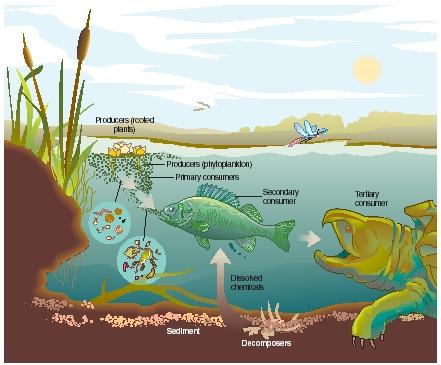
What Patti Freeman Evans asked us to do, as retailers, is consider our entire business and indeed our entire industry, as an ecosystem. What we do in one store, one chain of stores, or on one site has an incredible effect on many other people and companies. And her thought provoking analogy of businesses being living, breathing entities offers us a chance to reflect on the question, "what would we do, in our businesses, if we were conscious at every moment that our decisions profoundly effect the lives of everyone we reach for years to come?"

Wednesday, April 30, 2008

Vanity Fair's misstep on the 2008 Green issue

While Miley Cyrus's photoshoot maybe the talk of the hallways over at Vanity Fair, I think they have bigger problems - that of leadership. This month every magazine had their version of a Green issue. Finally, it seems that the wake-up call to protect the environment and reverse some of the damage we've done is reaching the mainstream. Last year I was so impressed withVanity Fair's Green issue that I subscribed to the magazine. When this year's Green issue arrived in my mailbox, I couldn't wait to read through it. And now I'm completely confused.


In spite of all of the incredible innovation and creativity happening in the world of sustainability, this year's VF Green issue simply rehashed the same old topics and players that have been kicking around for years. I didn't see anything about entrepreneurs with green-collar jobs, young companies that are making a big difference (i.e., Method), the growing popularity of CSA's, or the locavore trend. All of these are timely, trendy topics in Green. Rather than the fine reporting I've come to admire in VF, this issue's features are pretty much the same as those found in nearly every mass media source. 


And then to add insult to injury, there's a double-sided, heavy stock coupon for cigarettes right in the middle of the magazine! I guess I'm supposed to feel better that at least the tobacco is "additive-free", the coupon is printed on recycled paper, and the executives at the tobacco company are "passionate about the environment" and have organic growing programs. Gross - the ad was an exercise in how many environmental buzzword the company could haphazardly throw together on one sheet of paper.  Their product still causes illness, and is not part of a healthy lifestyle. Healthy living is exactly what Green is all about! What was the VF advertising department thinking when they accepted and prominently featured that ad? Clearly, they weren't thinking at all. 


Here's to hoping that VF makes better choices in the 2009 Green issue and that the rest of us take-away the power of being genuine. The damage being anything less than genuine can cause is not something any company can afford.