Showing posts with label books. Show all posts

Monday, January 11, 2010

Examiner.com: Interview with Sasha Abramsky, author of Inside Obama's Brain

Over the Christmas holiday I read the book Inside Obama’s Brain by Sasha Abramsky, journalist and Senior Fellow at Demos. The book is a beautifully crafted work that examines the charismatic draw of President Obama by exploring the experiences and insights from dozens of people who have worked alongside the President throughout his career. Abramsky masterfully articulates what qualities draw us to Obama, and how Obama honed those qualities in preparation for his ascent to the Presidency. The book intertwines President Obama’s personal history with his professional accomplishments in a way that makes the book impossible to put down until readers have absorbed every last word of Abramsky’s prose. I never wanted this book to end.

I had the great fortune to speak with Sasha Abramsky last week. To read the interview, click here.

Step 11: It's the Little Things

“Let's not forget that the little emotions are the great captains of our lives and we obey them without realizing it.” ~ Vincent Van Gogh


It’s easy to pay attention to the big emotions of our lives: Falling in love, grief from losing a loved one, pride for a hard-won accomplishment, or disappointment caused by betrayal. There’s no way to avoid those huge swells, positive or negative, because they take over our lives. Reading this Van Gogh quote made me think about all those tiny emotions that we feel at every moment, and that often pass by unconsciously: frustration at getting on a crowded subway car, wincing at the sting of the cold weather, gratitude when someone holds the door open for us, and joy from an encouraging message from a friend. These smaller emotions, while less significant in size, can add up to a great deal of our happiness quotient.


How do we feel about lives in the empty moments, when nothing particularly emotional is happening, when our lives are just humming along without any type of massive shift? In those quiet moments, we get a sense of our base emotions and attitude. The trick is to recognize and appreciate that empty moment. With all of the opportunities to fill up empty space, it’s easy to avoid ever having an empty moment. The empty moments are important because they allow us to take stock of the little emotions; they let us get a sense of where we are on the happiness curve.


On the way to work this morning, I was thinking about how we handle the constant tweaks of the little emotions that every day circumstances cause. Because I just interviewed Sasha Abramsky, author of Inside Obama’s Brain, I’ve been considering Obama as a role model for how to conduct our daily lives. Whenever Obama is thrown a curve ball, and isn’t quite sure how to react, he smiles. We can observe this behavior in his debates, during his press conferences, and during one-on-one media interviews.

The smile lets him pause, gather his thoughts, and remain outwardly composed in the process.


This tactic gives him the opportunity to work through his small emotions, rather than having to obey them. And he looks good all the way through the process: he looks as if nothing ever phases him and provides a thoughtful, articulate response. A wonderful example to manage the little emotions we all experience.

Wednesday, January 6, 2010

Step 6: The Roots of Ideas

I double majored in Economics and American History and got a minor in Psychology at Penn because I was interested in the energy of money, its influence on major world events, and its effect on the human psyche. Through the lens of History and Psychology, I found that Economics was much more a moral discipline than a disinterested field. Early on, we learned the name John Maynard Keynes and the underlying theories of Keynesian economics: a system of checks and balances, a fervent acceptance of the role of uncertainty, and a logical, predictable linking of specific actions to specific consequences. Because of my interest in the human impact of money, I was made to be his student.

He was an economist who loathed an over-reliance on data. Data can say anything we want it to say; it can be twisted and turned and reinterpreted to suit any hypothesis. To really understand a situation, we’ve got to pick our heads up, knowledgeable of the current data, though able to correlate it to easily expressed principles and moral values.

This morning I started reading Keynes: The Return of the Master by Robert Skidelsky. From the very first words, I re-discovered how important it is to read original theories and primary source material, not just interpretation of that material. As I got out of the subway, I thought about the other books I’m currently reading. I’ve started to gravitate toward these primary sources: books of Yogic scripture to prepare for my yoga teacher training class, works by John Dewey to understand the underpinning of our education system, autobiographical accounts of world events, and original documentation that established our government.

While it’s one thing to observe, practice, and read the works of experts and influencers, it’s only in reading the original grounding work of a philosophy, of a movement, that we can develop our own views and deep observations. If all we do is interpret and translate someone else’s interpretations of primary material, eventually we enter into a game of telephone, and the original beliefs are likely distorted beyond recognition.

To truly understand an idea, we have to go to the source, to the seed that gave that idea to the word. As Keynes so brilliantly stated and Skidelsky rightly echos, “ideas matter profoundly…indeed the world is ruled by little else.” The roots of those ideas matter profoundly, too. Get to the root.

Sunday, December 27, 2009

My Year of Hopefulness - Chasing Down Inspiration

"You can't wait for inspiration. You have to go after it with a club." ~ Jack London, author

Before 2009, I used to think of inspiration a something that just hits us. I kept a folder of inspirational pictures, stories, quotes, and clippings that I trolled through when I needed some uplifting thoughts and none seemed to find me. I believed in writer's block and the mystical muse of creativity who decided if, when, and how to show up in our lives. No more. After a year of actively seeking out hope and writing about it every day, I believe in the Jack London method, my inspiration-chasing club always at the ready.

In New York City, we're lucky that chasing down inspiration means just putting on a pair of shoes and walking outside our doors. Inspiration is everywhere. We have a host of amazing museums that I visit frequently (thanks to my employer's fantastic perk that gets us into almost every museum in New York for free!) Central Park and Riverside Park are two blocks away from my apartment. Broadway, off-Broadway, and off-off Broadway are burgeoning with some of the most inventive work to come along in decades. Bookstores are on nearly every corner, and there is no shortage of fascinating lectures, readings, and continuing ed classes in every subject, at every level. And if all else fails, just take a walk around the block, any block. You're sure to find some characters.

In other cities, some much smaller than New York, inspiration abound as well. In Orlando, Florida, I found the largest collection of Tiffany glass in the world. In Charlottesville, Virginia, I had some of the best meals of my life. In my own hometown of Highland, New York, the view from the Catskill Mountains still takes my breathe away. In Providence, Rhode Island, I saw one of the finest productions of Moon for the Misbegotten that I've ever seen.

Inspiration is everywhere - all we need to do is get out into the world and look. We can travel thousands of miles from home, or we can hang around in our own backyard. What matters is the pursuit: do we want to be inspired and are we willing to "sift the sands of the desert to see what we can find," as Clarissa Pinkola Estes says so eloquently in Women Who Run with the Wolves? If the answer is yes, then there are adventures upon adventures just waiting for us to hope on board. And if you can get your hands on a big club, that may help, too.
The image above is not my own. It can be found here.

Friday, December 25, 2009

My Year of Hopefulness - Thanks for Making My Childhood Dream Come True

Last year I wrote a few posts about Randy Pausch's Last Lecture. I first watched him give the Last Lecture on YouTube through tear-filled eyes and had to take myself for a long walk 3 months later when I read about his passing. His Last Lecture, devoted entirely to his pursuit of childhood dreams, reminded me of how important our earliest dreams are and how they shape us in adulthood. Randy Pausch reconfirmed my belief that childhood dreams, those daring, bold expressions of our deepest desire before we ever realize we have limitations, are some of the most valuable things we own. We should celebrate them and go for them with gusto, no matter what our age is.

This morning, I watched Lorelei, my two year old niece, open her gifts with wild abandon. She threw her head back and laughed with each one, regardless of how big or small it was. She liked the wrapping paper and boxes as much as the gifts inside. Watching her, I wondered how she would remember our Christmases together when she gets older. I want to do everything possible to make her childhood a blissfully happy period of her life, a time when great dreams were formed inside her beautiful heart.

Children change us, whether those children are our own, in our family, part of our friends' families, or children we work with in our communities. We rediscover a sense of wonder and magic through their eyes, and Christmas magnifies that wonder. They use that same wonder about the world to formulate the ideas that will become their childhood dreams, and if we spend enough time with them we'll find that they can help us formulate new dreams, too, while also reminding us of everything we dreamed of as children.

When I made up my list of childhood dreams, one of the big things I wanted to do was to be a published author. I thought that meant convincing a publisher that I was good enough for print. I never imagined there would be free (on-line) tools that would make this dream possible to achieve regardless of whether or not any publisher believed in me. I did spend a good amount of time worrying that no one would ever read what I wrote. In the past two and a half years writing this blog, I realized this incredible childhood dream with your help and support, and I wish I knew how to thank you all enough.

This Christmas, I am deeply grateful to all of you who have come to this blog to read about my journey. Your comments, emails, text messages, conversations, and face-to-face opinions and advice mean more to me than I could ever adequately explain. You made one of the great dreams of my life come true - you made me a writer. I hope you'll stick with me, and that my writing will continue to be helpful to you. I hope we'll be able to build some more dreams together. Wishing you a very Merry Christmas, this year and always.
The image above is not my own. It can be found here.

Wednesday, December 9, 2009

My Year of Hopefulness - Teaching butterflies to fall in line

"The best speakers know enough to be scared...the only difference between the pros and novices is that the pros have trained the butterflies to fly in formation." ~ Edward R. Murrow

I have a little secret - all my life I have had a terrible battle with stage fright. Job interviews, first dates, meeting new friends, first day of class. Any new experience with new people has me quaking in my boots for weeks beforehand. I combat this with a brave face and decent acting skills, but it's painful. In college, I lost 10 pounds in a week preparing for the play, Agnes of God. I kept getting sick right before every rehearsal and then right before every show. I have a hard time watching debates on TV because I get sympathy stage fright!

This weekend I read the book Confessions of a Public Speaker by Scott Berkun. The book is riotously funny and Berkun is an endearingly honest writer. He makes no bones about the knocks he gets for his profession, and yet his humor brings about such a sense of respect and admiration for what he does day in and day out to earn a living.

The quote by Edward R. Murrow is one of my favorites that Berkun uses, and the chapter of the book that follows this quote is better yet. Berkun lists the top 14 fears people indicated in a recent survey. Speaking before a group was the greatest fear people had. Death was #7, loneliness was #9, and escalators was #14. Crazy when we consider that for the most part we can avoid speaking in public, and we can't avoid things like, oh, death. We're most afraid of something we can control. What does that say about us?

Recognizing the ludicrous ranking, Berkun goes on to talk about his own fear of public speaking, and the fear of speaking publicly that many of the world's notable speakers have (Bono, Elvis, JFK, and Barbara Walters to name just a few.) The trick isn't eradicating the fear; it's figuring out how to use it to our best advantage that counts. Get the butterflies to fall in line. For me, my fear is best used to teach and my defense is to prepare, prepare, prepare. And if you're thinking about that ol' "imagine everyone in their underwear" trick, Berkun will give you his perspective on why that is a very, very bad idea.

In Confessions of a Public Speaker, I realized that the fear of public speaking is really about being afraid we just aren't enough. Essentially, public speakers of every variety stand up there and put themselves in the perfect position to be knocked down and dragged by the hair to the back of the room. They tell themselves "what if I'm not good enough, smart enough, or entertaining enough?" The fear of public speaking is really the fear of not being accepted for who we are.

Later on in the book, Berkun discusses the reasons people go to hear public speakers, including the desire to learn something, be inspired, and have a positive experience they can share with others. Simple reasons really, and when looked at through the lens of "give the people what they want", the butterflies begin to work together to create one gorgeous pattern, each lending their own unique flair. For the many of us who suffer from stage fright, I'm convinced that Berkun is on to something here.

Sunday, December 6, 2009

Book Buddy Letter 2

Dwight, the 3rd grader I write letters to as part of the Learning Leaders Book Buddy program, just sent me his first letter. We are reading Charlotte's Web together and we write letters back and forth at designated points in our reading. As promised, here is Dwight's letter to me, and my letter back to him.

"Dear Christa,
I like writing letters to you, too. This is one of my favorite books, too. I enjoy reading, too. I find inspiration in my reading, too. I grew up in Queens. My favorite part of Charlotte's Web is when Wilbur and Charlotte meet.

Your Book Buddy,
Dwight"

"Dear Dwight,


I enjoyed reading your letter. We have so much in common! We both like to write letters, we both find inspiration in our reading, and we both like meeting new friends.


Another activity I really enjoy is helping my friends and family members, just like Charlotte
helped Wilbur. It is a very special thing to know that we have skills and resources to help someone we care about when they have a problem that they need to solve. I am very close to my family and friends, and they are a very important part of my life.


We are at an interesting point in Charlotte’s Web. Her solution to use her webs to talk about Wilbur was really creative! I like that she chose interesting words and phrases that were very different from how people usually described Wilbur. What did you think of Charlotte’s plan?


Now that they are off to the fair, I wonder if Charlotte will continue putting words into her webs or if she will think of something different to do. Wilbur is really counting on her to help him win the competition at the fair. What do you think her plan for the fair will be?


I’m looking forward to getting your next letter!


Your Book Buddy,

Christa"


These letters remind me of how important it is for children to have adult role models in their lives, people they can talk to about their thoughts and opinions. Articulating our own stories is an underrated skill, and one that I hope I can help Dwight with through these letters.

Friday, November 27, 2009

My Year of Hopefulness - Everyone Can Draw

"If you think you can't draw, too bad. Do it anyway." ~ Tim Brown, CEO of IDEO, in his book Change by Design

I've been lamenting for some time that I can't draw. I'm a much better writer than visual artist, and this is exacerbated because I am an auditory learner, not a visual learner. Thank that's weird? You're right - auditory learners make up only 20% of the population. Add it up and it's easy to understand why I don't have any natural ability to draw, nor have I ever really had a desire to learn.

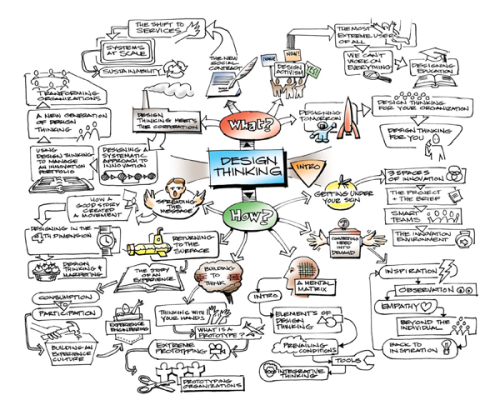
And then I read Tim Brown's excellent book, Change by Design, that explains his philosophy on design-thinking and the future of the field. He talks about mind maps, schematics that illustrate ideas though visual depictions rather than through written briefs or powerpoint presentations. This is a kind of drawing I can get into. Think of them as multi-dimensional tree diagrams blending pictures and words to illustrate ideas. Rather than just working left to right and using the basic construct of option A or B to progress from problem to solution, a mind map starts with a question that takes the form of "How might we ( fill in the blank)?" for a specific population. For my program with Citizen Schools, I will be asking the kids I work with to solve this dilemma with a mind map "How might we build a public school curriculum for the graders to encourage creativity and entrepreneurship?"

As so often happens, as I was reading Tim's book, I saw an interview with another Tim whom I greatly admire, Tim Burton. He was discussing his views on drawing and creativity and echoed Tim Brown's sentiment. "Every child believes he or she can draw. Too many adults have found their creativity beaten out of them." And this brings me back to my long-held belief that I have only just begun to fully articulate: it is much easier (and effective) to help children maintain their creativity through to adulthood than it is to repair the confidence of adults who believe they have no creativity at all.

The truth is that I've lost confidence in my ability to draw, believing that my creativity is relegated to writing and developing products and not at all to drawing. The Tims helped me realize that I am selling myself short. Somewhere inside me is a visual artist of some sort yearning for a paint brush (or crayon or chalk or colored pencil) and a canvas (or piece of paper or blank wall or empty piece of sidewalk).

So here I go with another resolution to live a more authentic life: even if it's not good, I'm going to draw a little bit every week with the help of my mind maps. I'll let you know, or better yet I'll show you, how it goes by publishing the pieces to this blog. Stay tuned as I re-teach myself to draw.

The image above is not my own; I'm just starting to draw so my pictures aren't this good - yet. It is the image created by Tim Brown for the table of content of his book Change by Design. It can be found here.

Sunday, November 22, 2009

My Year of Hopefulness - Unquestioned Answers

While in Costa Rica, I continued reading Lynne Twist's book The Soul of Money. So many of her sentiments about the use of money, sufficiency, and abundance have resonated with me. At the end of one particular chapter she challenges readers to explore not unanswered questions, but unquestioned answers. I have not been able to get this term out of my head. I spent a long night in Costa Rica, tossing and turning, wrestling with the unquestioned answers in my own professional life.

Since going to business school, I have been on a track - to pay back my loans, to believe that I must make a certain amount of money in my single paycheck, to climb, climb, climb as high as I can in the field of business. We hear so often that there are not enough women at the very top of business world, that people from my socioeconomic background are under-represented and needed in large corporations, as are those who embrace empathy and innovation and change. Up until now, I assumed that these sentiments were a given, answers to timeless questions and concerns in business, and that I must heed this call.

With this latest economic downturn, these very things that I have held to be true without question are now up for scrutiny. Everything is up for debate. I went to an innovation conference several weeks ago, hosted by Roger Martin of the Rotman School of Business. My former boss, Bob, invited me because he knows of my deep interest in change and design. Tim Brown, the CEO of IDEO and one of the panelists at the conference, discussed the dilemma of big business today as it relates to change. IDEO runs workshops throughout the year that are training sessions for business people to encourage more creativity within their companies. They are wildly popular events, and there's only one problem with them. "Once people open up their minds to the world of design," Brown said, "they can never go back. Many times, attendees of our workshops leave their jobs shortly after they complete the sessions. They can't accept a life in typical big corporations anymore. They know better."

Big corporations have been trying so hard to make innovation and change a part of the culture, or at least trying hard to pay lip-service to change. The difficulty is that only a handful of corporations really believe in the power and necessity of change. Target, Apple, Nike are among the few. By and large most big corporations just want to return to the good old days of fat profits, zero regulation, and big, big bonuses. Those individuals who really want change, innovation, and design to be incorporated into the fabric of a company get too frustrated with bureaucracy and the slow, lumbering gait of a company strangled by its own size. And so, they leave for smaller, more nimble, freer pastures. Who could blame them?

These are the brave souls questioning the answers that business has for so long assumed to be universal truths. Now, the truth is not quite so clear as it once was. The people who have long-benefited from business as usual (so much so that BAU has become a common acronym in their lexicon) are getting very nervous because their lifestyle is being threatened by those asking why, those who are questioning the 'given' answers.

For those brave enough to ask why, their dilemma now lies not in how to get their ideas heard by the ones who phone it in, but whether or not it's even worth it to ask why at all. Many are leaving to build their own dreams, to bet on themselves rather than on a big corporation. The world of business should be afraid. To survive in this new economy, corporations need the questioners much more than the questioners need the big corporations.

I laid in my bed, realizing that these questioners are the next great breed of entrepreneurs, the next batch of people who are on the verge of jumping from the safe, secure cliff and changing the world as we know it. And then I asked myself the question, "Will I be brave enough to count myself among them?" I waited long into the night for an answer to come from the darkness, and with the sun my own heart rose up to speak a quiet, strong, clear "yes".

Wednesday, November 4, 2009

My Year of Hopefulness - Sesame Street Celebrates 40 Years

I love Sesame Street. When my 2 year old niece was here visiting a few months ago, I discovered that I can get Sesame Street on demand through my cable company. This is exciting news. I love children's television almost as much as I love children's literature. Call me juvenile and immature. I love those furry, colorful monsters. They're old friends. For most of my childhood we had a small black and white TV and I distinctly remember sitting in front of it with my sister, Weez, and singing along, learning Spanish, my numbers, colors, and the alphabet.

I didn't realize that Sesame Street was also teaching me other pertinent information that would shape my life going forward. Sesame Street taught me about caring for my community and neighbors. I learned about friendship, and sharing, and communicating honestly and fairly. The mix of cultures on Sesame Street taught me tolerance and acceptance and the great celebration that we should hold for diversity.

Sesame Street started as a pilot project, a result of the passion and concern for children and education by a small group of people in New York City. The narrative around the start of the program and its growth is every bit as compelling, if not more so, than the content of the show itself. A few months ago, I wrote a couple posts on this blog that were inspired by Street Gang: The Complete History of Sesame Street. Weez bought it for me for my birthday and I read it cover to cover, taking delight in every word. My posts talked about a life lived in 3 acts and the need to prepare to be lucky. They are good reminders of the subliminal messages that are so important for children to receive early on in life.

So today, we celebrate the milestone of 40 years for this incredible program. It has without question improved the lives of millions of children around the world. At Sesame headquarters at One Lincoln Plaza I hope they are raising glasses high tonight in honor of a big yellow bird, a green trash can inhabitant, a blue cookie lover, a pair of friends obsessed with oatmeal and rubber duckies, a purple count who loves numbers, a red lovable three year old and his goldfish, Dorothy, and the many others who are the first friends that so many of us have come to know and love. Our lives are so much richer for having known them and learned from them. Happy birthday, Sesame Street!

Tuesday, November 3, 2009

My Year of Hopefulness - Charlotte's Web

I'm reading Charlotte's Web with my new book buddy, Dwight. Dwight is a 3rd grader who lives in Queens. We got connected through an organization called Learning Leaders. Based in New York City, the provide supplementary educational programs to kids in public schools. Their book buddy program matches up adult volunteers with elementary school students. We read a book together, and write three letters back and forth as we work our way through the story.

As a kid, I loved to read. My house was filled with literally thousands of books, much to the detriment of any semblance of tidiness. While I didn't love being in a cluttered home, I loved being surrounded by books in every room. Now I recognize that most kids aren't as lucky as I was to learn to love reading at such a young age. The book buddy program and Dwight are one small way that I hope to turn that around for a kid.


I forgot how much I love
Charlotte's Web. I forgot how scared Wilbur was and how concerned he was with being lonely and making new friends. Children's literature introduces some heavy themes, despite its light-hearted exterior. Reading this book has made me fall in love with the genre all over again, and encouraged me to continue writing for this age group.

I'll post up my letters to Dwight and his letters to me on this blog as we continue through Charlotte's Web. I'm excited to read what he has to say. I'll meet him in person in February when we all get together for a celebration lunch. Apparently, the kids always think the adults they are writing to are total rock stars - a shot in the arm we could all use!

" Dear Dwight,

I’m really happy to be reading Charlotte’s Web with you and writing letters to each other as we work through the book. This was one of my favorite books when I was in school, and I’m looking forward to re-reading it. I really enjoy reading and I write, too. I always find inspiration for my own writing by reading other books.


I grew up in a very small town about two hours north of Manhattan, along the Hudson River. We had a farm where we grew apples and every fall we would invite people to come pick apples from our property. We didn’t have as many farm animals as there are in Charlotte’s Web, though my sister, Maria, and I spent a lot of time in the woods around our house watching for deer, turkeys, and foxes. We also had a very large pond that had frogs, turtles, and fish.


Our family has always had pets so my love of animals goes back as far as I can remember. We had a lot of dogs, a few cats, an aquarium, and a rabbit, too. My work is very busy now so I don’t have time for a pet at the moment. I hope I can have a pet of my own someday soon.


One part of Charlotte’s Web that I forgotten was how much Wilbur wanted to make new friends in his new home. I have experienced that many times, too. I went to elementary school, middle school, and high school with all of my same friends. When I went to college and then to graduate school, I didn’t know anyone so I had to make all new friends. At first that experience was scary, though the more often I had to make new friends, the easier it became. Now meeting new people is one of my favorite things to do.


What’s been your favorite part of the book so far? What kind of plan do you think Charlotte will make to help save her friend, Wilbur?


I’m looking forward to your first letter!


Your Book Buddy,

Christa"

Tuesday, October 6, 2009

My Year of Hopefulness - Your Strongest Life

"We don't see things as they are; we see things as we are." ~ Anais Nin, French writer and diarist

I'm a huge fan of Marcus Buckingham. If I had to make a short-list of the top 5 people I'm most interested in meeting, he'd be one of them because of his keen insight into human behavior. He knows what makes us tick, all of us, just upon meeting us. He looks at his role in life as a guide on the side who wants to help people reach their full potential happiness and satisfaction. That's it. Simple, straight-forward, no nonsense, no voodoo, no magic. It takes dedication and hard work to reach our potential. He's giving us tools to get there. He's not here to make us feel better about the very bad choices we may have made in the past and our unfortunate habits (and we all have them). He's here to help us realize and maximize our ability to effect positive change, in ourselves first and then in the world around us.

My friend, Lon, is also a fan and recently sent me a series of articles that Marcus Buckingham has been writing for the Huffington Post on the subject of women's happiness. We're in a tough spot: as a gender, half the world's population, our happiness has been on a steady decline for 40 years. 40 years. That is a very long time to be unhappy. Marcus Buckingham offers up surprising observations and remedies for this trend. It's important reading for all - men and women alike.

I clicked through the articles and eventually landed on a link to an on-line game that serves as life's central casting office. Through a short list of questions, Marcus Buckingham shows us the lead role and supporting role that we were born to play, just as we are right now, and that also stretches us by revealing where we should focus our time and energy. It's fun, insightful, and accurate. I hope you'll take a couple of minutes to give it a whirl. While it's geared toward women on the website, it's equally applicable to men: http://www.wowowow.com/relationships/marcus-buckingham-find-your-strong-life-test-376609

Here's what mine revealed: best lead role for me - Creator; best supporting role for me - Weaver. Hmmm....what does all of this mean?

Creators:
1.) "Begin by asking: 'What do I understand?' You aren’t immune to the feelings and perspectives of others, but your starting point is your own insight, your own understanding."

Great - now I can stop feeling bad about my natural instinct to look internally first and then externally second!

2.) "Your best quality: Your ability to find patterns invisible to others."

As a kid, hide-and-seek was my favorite game. I considered being an anthropologist, a paleontologist, an astronaut, and a psychiatrist. All searching professions. At heart, I am a Seeker, Explorer, Finder. I sometimes wonder if I missed my calling as a detective of some sort. I do like to find what's special and unique in things, places, and people who do not immediately look special upon first glance. My favorite game as a kid was hide-and-seek. I love the idea of underground places, secret passageways, and buried treasure. I love the search. I want to get at what's underneath the exterior, of people and situations.

3.) "Always: Find time to be by yourself."

So true - and a goal of mine as of late. I do need some time on my own every day to re-group. I love people, and to make sure I always enjoy their company, I also need my time for me, too.

4.) "Be careful you: Don’t think so long that you never do anything."

I am the quintessential list maker. I weigh pros and cons and consequences and upsides and downsides and comparison shop. These are important things, and I need to make sure to balance them with enough action. Sometimes, we just have to go for it, even if it seems that the odds are not stacked in our favor!

5.) Your smartest career move: Any job where you’re paid to produce new content.

What my life and writing is all about, and what I think I am just about ready to jump off the cliff and do full-time!

And my ideal supporting role - Weaver. Creator I understand inherently. Weaver? Does this mean I need to get myself a loom? As it turns out, no. Weaver is a synonym for connector. Of course!

Weavers:
1.) "You begin by asking: 'Who can I connect?' You see the world as a web of relationships, and you are always excited by the prospect of connecting two new people within your web."

I love nothing better than linking two people whom I adore to one another when there can be a mutually-beneficial relationship. It's a puzzle, and I love puzzles.

2.) "Your best quality: Your genuine curiosity."

My favorite question has always been 'Why?' and I'm not shy so I asked it (and still ask it) A LOT. My poor mother. I was the 'Why' child in every class, at every moment. Now I'm the 'Why' adult. You can't take the kid out of the classroom...

3.) "Always: Trust in your web of relationships."

Done - they get me through the tough times and help me celebrate the great abundance in my life. My most valuable asset is my network, and I covet it.

4.) "Be careful you: Don’t push people together who shouldn’t be."

I've had some failures on this front for sure. It's not just about the experience and interests of people, but their personalities, too, that dictate if a connection is really worth making. I need to be more mindful of that

5.) "Your smartest career move: Any job where you’re paid to speed up the connection between people."

That would be my obsession with on-line community-building. I love it. If I could, I'd spend every moment of my life working toward this end. Connect, connect, connect. As a kid, my favorite art activity was connect-the-dots. I loved to see what would emerge, how something would develop. It's still true - my life and relationships are in a constant state of emergence and development.

I've printed out my lead role and supporting role descriptions and hung them up at my desk and on my fridge to remind me what's important, and where and on whom I should spend my time, energy, and talents. Strongest life, here I come!

Wednesday, September 30, 2009

My Year of Hopefulness - Rest and Relaxation

"Darkness cannot drive out darkness; only light can do that." ~ Dr. Martin Luther King Jr.

Though it's just turned to Fall, I've found myself drawn to re-reading one of my favorite essays every night this week - Winter by Nina Zolotow. I first saw it in Rodney Yee's book Yoga: The Poetry of the Body. I understand this essay now more than I ever have in the 7 years since I first read it. I pull it out in times of trouble, in times when I'm feeling sad and worn out and confused about how to move forward. Her conclusion makes me a feel a little better, gives me a bit more license to give myself a much-needed break. I love that the only period is at the end of the essay, and that all of the other sentences and phrases run together in one long, cohesive thought, just like life.

And now here I am at the final day of September, ready to release this month in favor of a happier, sunnier October. And some much needed rest and relaxation. A tired heart and mind can only be rejuvenated by rest and care, not by further trial and challenge. So that's my goal for the next little while - a simple one, really. To just take care of this heart who has endured so much this month, to surround it with love, to nurture it back to its original state. It has done some heavy lifting this month and earned some well-deserved down time. Just like the fig tree, it will certainly be revived.

Last night, I listened to Professor Michael Sandel's lectures at justiceharvard.org. They were just what I needed. He spoke about how to value life and the utilitarian philosophy that seeks to maximize pleasure over pain. I was lulled into a relaxed state as he told me about Sophocles and Plato, J.S. Mill, and Jeremy Bentham. And fell into a deep sleep between my comfy sheets made of bamboo fiber and topped by a fluffy duvet. I buried myself into my new bed, cocooning and nurturing my weary body and mind, and didn't stir until the sun came up. So this is what it feels like to heal.

Winter by Nina Zolotow
"In their garden there was always a wild profusion of tomatoes ripening on the vine, and leafy basil, arugula, and lettuce, and glossy purple eggplants, and red and yellow peppers, and zucchini with its long, bright blossoms, and there was always lunch at the wooden table on hot summer afternoons, with plates of pasta and bread and olives and salads with herbs, and many bottles of red wine that made you feel warm and drowsy, while bees hummed and the sprawling marjoram, thyme, and rosemary gave off their pungent fragrances, and at the end of the meal, always, inexplicably, there were fresh black figs that they picked themselves from the tree at the garden's center, an eighteen-foot fig tree, for how was it possible - this was not Tuscany but Ithaca - Ithaca, New York, a rough-hewn landscape of deep rocky gorges and bitter icy winters, and I finally had to ask him - my neighbor - how did that beautiful tree live through the year, how did it endure the harshness of a New York winter and not only survive until spring but continue producing the miraculous fruit, year after year, and he told me that it was quite simple, really, that every fall, after the tree lost all its leaves, he would sever the tree's roots on one side only and, on the tree's other side, he would dig a trench, and then he would just lay down that flexible trunk and limbs, lay them down in the earth and gently cover them with soil, and there the fig tree would rest, warm and protected, until spring came, when he could remove its protective covering and stand the tree up once again to greet the sun; and now in this long gray season of darkness and cold and grief (do I have to tell you over what? for isn't it always the same - the loss of a lover, the death of a child, or the incomprehensible cruelty of one human being to another?), as I gaze out of my window at the empty space where the fig tree will stand again next spring, I think, yes, lay me down like that, lay me down like the fig tree that sleeps in the earth, and let my body rest easily on the ground - my roots connecting me to some warm immutable center - luxuriating in the heart of winter."

The photo above is not my own. It was taken in Centennial Park in Sydney, Australia by Mike Bogle. I can be found here.

Wednesday, September 23, 2009

My Year of Hopefulness - Muhammad Yunus

"I am always optimistic. There is no other way...I am not interested in a person's past. I care only about their future." ~ Muhammad Yunus

Many economists tell us that so long as there is capitalism, there will be poverty. So long as there are "haves", there will be "have nots". Tonight I went to 92Y to see Muhammad Yunus, Founder of Grameen Bank, Noble Prize winner, and an economist who has stood up to the cynics time and time again. The most remarkable thing about him is not that he blatantly defies his peers, but that he defies them, has proven the fallacies in their beliefs through the outcomes of his own actions, and garners the respect of his detractors.

When I consider what it's like to live an extraordinary life, Professor Yunus is the first person I think of. His indomitable will, compassion, love, and concern for others is unmatched, particularly in the financial field. He is my hero so it was with great excitement that I sat in the audience at 92Y waiting for him to be interviewed by Matthew Bishop from The Economist. Yunus did not disappoint. From the moment he stepped on stage, he glowed with goodness.

The more he discussed microcredit and entrepreneurship, the happier I became. I could feel his goodness making its way into my own heart. His calm, charming confidence is something to behold and emulate. I could barely take my eyes off of him.

Then a strange thing happened. Professor Yunus began to talk about how to get started, how to begin building a life that truly contributes to the benefit of humanity. "Make a pact from where you are, now, to help 5 people up out of welfare." He discussed how he didn't try to tackle the whole country of Bangladesh in his early work. He worked with a handful of people in a very small village. And when that seemed to work, he ignored the nay-sayers, as always, and helped a few more people. And encouraged those he'd helped to help others in the same way. Take tiny, tiny steps to help others, and never, ever give up. "That," he said, "is the miracle seed."

It was in that instance, in Professor Yunus's miracle seed comment, that my heart and mind joined forces and took a decided turn. I could feel a physical, mental, and emotional shift within me. At the conclusion of the talk, I ran home, literally. My friend, Richard, is always encouraging me to write to anyone and everyone who interests me. This advice as served me well in the past, so I got home and cranked up the letter writing machine.

On my way back through Central Park, I composed a letter in my mind to a very wealthy businessman who runs a company that has recently set up a very profitable service. I've written to him before, once by name and once anonymously, offering up thanks and suggestions to him, respectively. Today, I asked for his help is using a very, very small portion of the money his service has made to set up a small test of microcredit in New York City, similar to the work that Professor Yunus's Grameen Bank is doing in Jackson Heights, Queens. When I got home, I typed up the letter, printed it, signed it, and stuck it in an envelope. I ran out to the mailbox on the corner outside of my apartment building, and dropped it in. I had to get it written and out the door before I got too scared to send it. So now I'll wait and see if a response comes.

It's an odd thing when we hand over the reigns to our future. When we leave rational thought behind and follow our hearts, it's amazing what we find, what we can accomplish. Professor Yunus closed the talk by telling a story about Dannon yogurt. He kept pushing them and pushing them to develop a yogurt product, in a special edible container, that would benefit the children of Bangladesh. (Half the children who live in Bangladesh suffer from malnutrition.) "An edible container?" they asked him. "Yes, yes, we must," demanded Professor Yunus. He thought they'd be angry. Instead they thanked him for pushing the boundaries of their work. "How can we answer something we are not asked?" they said. Perhaps this businessman I wrote to will feel the same way.

And now the fear is setting in. What have I done in writing this letter? Who do I think I am to go around suggesting that a large financial institution consider taking a tiny slice of their profit during a recession and using it for a microcredit program? And then I smile, and think to myself "I just let my inner-Yunus run free." If I'm scared, I must be doing something worthwhile. What could our world be like if we all did just that? What if we suggested the impossible and then went for it?

Monday, September 21, 2009

The Journal of Cultural Conversation: What Can You Do To Help The World's Women?

Last weekend, I went to 92Y to hear Nicholas Kristof and Sheryl WuDunn discuss their new book Half the Sky: Turning Oppression into Opportunity for Women Worldwide. The book chronicles their travels through Africa and Asia, interviewing women who are enduring unbelievable circumstances and exhibiting equally unbelievable strength. It is filled with data, facts, and figures that methodically document the travails of women in the developing world. Their stories simultaneously broke my heart and lifted me up. They are issuing a call to action, today, to each of us.

To read the full article, please click here.

Sunday, September 20, 2009

My Year of Hopefulness - At the End of the Test

One can't learn much and also be comfortable. One can't learn much and let anybody else be comfortable.

On Friday night I went for a walk with my friend, Dan. We wound our way through Central Park talking about recent events in our lives, challenges we're facing, things we're excited about. We got onto the subject of testing. When recently talking to a friend of his about a particular circumstance he's working though the friend said, "Like Job, you are being tested." Dan's response was a simple question, "What do I get if I pass the test?" I've been thinking about that question all weekend.

As I was working through my yoga practice this morning, I was thinking about the idea of comfort versus discomfort. Times of testing are often uncomfortable times. We just want to get through them as quickly as possible. We want the shortest path to relief. Yoga teaches us to be comfortable being uncomfortable, sinking into the pose, going deeper, as opposed to pulling away often helps us. Perhaps the shortest relief to discomfort is through, similar that old saying of "If you're going through hell, keep going." Every day that saying makes more sense to me.

Maybe Charles Fort is correct: If we shrank away every situation that was challenging, every situation that brought some kind of fear or discomfort, perhaps we'd never learn anything. If we embrace fear, discomfort, and confusion for the sake of learning, maybe challenging times become easier to bear. Maybe learning is the prize at the end of our test. All that's required of us is patience and commitment. We just have to keep showing up, for ourselves and for one another.

Friday, September 18, 2009

My Year of Hopefulness - Motivation and The Little Prince

"If you want to build a ship, don't herd people together to collect wood and don't assign them tasks and work, but rather teach them to long for the endless immensity of the sea." ~ Antoine de Saint-Exupery

I love The Little Prince. It was one of my favorite books as a child. I love his wide-eyed questioning of life, and his desire to explore things that are strange and unexplained. As children often do, he was able to make connections between seemingly disparate activities and relationships, and in the process showed us how to think about our lives in a larger context than just our day-to-day collection of tasks. He asks us to consider our role in and contribution to humanity as a whole.

I was thinking about The Little Prince this morning, eating my Cheerios and looking at the water towers that dot my view from my apartment. The water towers look like brave guards, standing watch; they almost seem to breathe. They make me feel safe. The city looks so different from 17 floors up. I'm always struck by that - as I get down to the street-level, my neighborhood transforms. Up above, I have the ability to be more idealistic. The height helps me dream and consider my larger motivations in life, apart from the actual tasks I'm engaged in; it helps me think like the Little Prince.

This quote from Antoine de Saint-Exupery is helping me frame up my own desired contribution to humanity. I want to help as many people as I can to use their creativity to improve our world. That's not going to happen in a business plan; it's not going to happen through mandates and time lines and a to-do list. It can happen if I follow Antoine de Saint-Exupery's advice in every area of my life, with every interaction I have with every person I know and meet. It's that desire to play a part in building a better world that I must foster in all of my relationships. Individuals will find their own way to make a contribution. They all have their own talents and interests that can be used toward this common goal; my role is to be their biggest cheerleader, their champion, their advocate, and where applicable, their guide.

Sunday, September 13, 2009

My Year of Hopefulness - Value we can't see

A week ago, I found myself in Barnes & Noble nosing around in the children's fiction department. In order to begin working on the scripts for my education program, I wanted to get a feel for a 6th grader's vocabulary, sentence structure, and plot complexity. I was wandering around the store feeling underwhelmed. Where were all of the good children's books?


And then just as I was leaving a small set of books caught my eye. Published by Scholastic, Blue Balliett wrote a set of kids mystery books that involve several main characters that carry over in the series. I picked up The Wright 3, a book about three 6th grade friends who find themselves in a race to save the Robie House, Frank Lloyd Wright's Chicago masterpiece, from demolition. I found it oddly comforting over this last week because of several key messages it offers in a very forthright fashion - just the way that kids do.


1.) "Don't give up. In darkness, much work can be accomplished." I think about how much darkness was in that stairwell of my old apartment building during the fire. So much raced through my mind as I scrambled down the stairs - from "stop drop and roll" to things I never got a chance to say people whom I care about to "I will get out of this building unharmed". In darkness, we develop a keen sense of sight and insight for things that we cannot see in broad daylight.


2.) "Sometimes when you lose something, you end up getting something else. Only you can't know about the second thing until you've lost the first...losing is sometimes gaining." It's human nature to lament a loss of any kind whether it's our home, our belongings, our jobs, a relationship. What's so often under-appreciated is that losing something makes room for something new, and often better than what we had before, and it gives us a new appreciation for the things and people we do have in our lives. It takes a while to see that trade-off as a good one. In the past I have hung on to a sense of loss for far too long. I am trying to change that.


3.) "It's sometimes hard to tell the line between real and unreal." This world and the energies it contains work in mysterious ways. Magic and things that cannot be explained are constantly at work. Our life is full of coincidences. People appear in our lives, then disappear, then reappear again. An opportunity comes around, we may pass on it, and then it comes around again for a second and third chance. This world always has something to teach us.


4.) "Sometimes little things can appear big, and big things little." This idea is especially powerful for me this week. I used to think I needed so many things. My apartment was filled with things I loved, things I could not imagine living without. In the end very little of it mattered. Actually, none of it really matters too much. My health and the people I love are really the only things that matter to me now.


5.) "What you notice first isn't always what you're looking for." This is my favorite idea from The Wright 3. We're so quick to judge, categorize and title a person, place, or thing. And sometimes the value we connote to an item or a person isn't permanent. Some things and people become more valuable to us with time, and it can be a long, slow process to figure out just what the right value should be. We owe it to ourselves to give things and people a chance to prove their worth. The reality of a situation is not always what it initially presents itself to be.

Saturday, August 29, 2009

My Year of Hopefulness - Success in Writing

"To appreciate beauty; to give of one's self, to leave the world a bit better, whether by a healthy child, a garden patch or a redeemed social condition; to have played and laughed with enthusiasm and sung with exultation; to know even one life has breathed easier because you have lived -- that is to have succeeded." ~ Ralph Waldo Emerson

Last week I sent an email off to a nonfiction writer whose work I greatly admire. She writes the histories of people who defied odds to create something truly remarkable in the world. I wanted to interview her for The Journal of Cultural Conversation. I was delighted when she emailed me immediately to say she'd love to be featured. I fired off a set of questions to her and waited for her response.

As I read her answers, I found myself nodding my head in full agreement with everything she said. Until I got to the final question: "What advice do you have for aspiring writers?" Her response: "Honestly, we're in such a difficult time for non-fiction writers because the Internet has blown up the longtime economic models, I'm not sure how newcomers are supposed to make a living. I started off in newspapers and then briefly free-lanced for magazines. What newspapers are hiring today and what's the future of magazines? The on-line sites pay nothing or tiny amounts. Ebooks may well undermine the publishing model that makes sizable advances possible. So, I truly don't know how young writers will develop paying careers. And I find that sad." Ouch.

I sat back at my desk and let out a long, slow sigh. I can't possibly publish that answer with the interview. And then I considered why I was so resistant to that answer. After all, this writer sent me this very honest answer, and I always want honesty from people I interview. I don't want candy-coated metaphors. Tell me what you think and how you feel. She did, and now I'm upset. Not exactly fair of me, is it?

Let's consider this from her point of view - she's a very established writer. She'd put out tomes that are the definitive works of the people she's written about. She's in the industry of publishing and she's frustrated by the changes she sees occurring. We're all entitled to feel frustrated from time to time. Maybe she was in a bad mood when she got my email. Maybe she was hungry - I get cranky when I'm hungry, too.

In this conversation with myself, I had to ask the question, "why am I doing this? All this writing? What am I trying to do here?" Recently a friend of mine questioned my motive about my writing. Out of concern, the friend thinks I might be wasting my time with all this work. At first this comment really hurt me, particularly because I have always been so encouraging of this friend. With this question before me, an answer quickly and easily surfaced, much to my surprise.

I'm not trying to make a living as a writer. I make a good living as a product developer, and I enjoy that work immensely. But it's not my life. Writing is helping me build a life I'm happy with and proud of. It's helping me to connect with interesting, passionate, inspiring people. I learn so much through these connections. And most of all, my writing is helping others. I get emails, texts, phone calls, and online comments on a variety of sources about how much my posts have helped them. It's humbling. With writing, I'm doing some good in the world, and that's all I'm really after.

The author I interviewed may be absolutely right - perhaps the publishing / writing paradigm has shifted forever due to technological advances. Maybe a career like hers, the way that she built it, just isn't going to be possible going forward. And that's just fine with me. Change arrives on our doorstep every moment, and there's no way to shut it out. We can't stop the world from transforming. What we can do, and what I try to do everyday, is show up in the world, tell my stories with honesty and grace, with the hope that some of them resonate with another soul. That's really all I ever need in this life - to reach out, connect, and feel like I'm part of the global conversation.

Wednesday, August 19, 2009

My Year of Hopefulness - Take Care of Women

There are a few books on my shelves that changed by life. Nelson Mandela's Long Walk to Freedom because he helped me understand the true meaning of what it takes to sacrifice for the greater good. Anne Lamott's Bird by Bird because her words and advice welcomed me into the world of being a writer. Greg Mortenson's Three Cups of Tea is a striking story of perseverance. And for the first time, he confirmed for me what I have thought intuitively for a long time - women are the root of the world's progress. If we invest in improving, they become the rising tide that lifts all boats. There is scientific data collected over decades of research that shows the tremendous benefit experienced by the world as women become more educated, financially independent, and confident.

This coming Sunday, The New York Times Magazine will run a stunning cover story by Nicholas Kristof and Sheryl WuDunn about raising up "the world's women, as the best way to address global poverty and instability." The entire issue is devoted to the subject. You can get a sneak preview of the article here. The article is a portion of their book entitled Half the Sky: Turning Oppression Into Opportunity for Women Worldwide. The book will be available for purchase on September 8th. Kristof is an active Facebook user and I highly recommend his page for anyone interested in global social issues.

The area of philanthropy and community building that I find most fascinating is the power of leverage. Jacqueline Novogratz, founder of Acumen Fund, writes about it so eloquently in The Blue Sweater. Greg Mortenson writes about it, as does Robert Egger in his book Begging for Change. If I give $1 to one group, they get $1 worth of products or services that helps their cause. What I want to do is give my $1 somewhere so that it does $1.25, $1.50, $2 worth of good. It's the familiar economic principle of economies of scale. How much of a product or a service do I have to buy so that each incremental unit becomes cheaper? It's buying in bulk applied to the goal of societal benefit.

Now step away from the scientific data, and we find that embedded in Half the Sky are remarkable stories of endurance, passion, and the transformative change of whole communities built upon the rock of female confidence. Abbas Be became a bookbinder and now funds her sisters' education after spending her early years as a prisoner in a brothel in Delhi. Saima Muhammad from Pakistan lived a miserable existence under the thumb of her abusive husband until she received a $65 microloan from Kashf Foundation to start a textiles company that is now thriving. The stories are powerful and many, and they come from every corner of the globe. They also make any challenge I face minuscule. If these women can survive and thrive in their circumstances, we can all do well with what we've got.

In so many nations, women and girls are marginalized and abused, their value as community members and as human beings discounted to the point of worthlessness. This must stop. Today. Kristof and WuDunn continue to lay the ground work along with so many other brave voices that must lead to a world that provides a better existence for women and girls. Better education, healthcare, and just the opportunity to improve their lot. You really want to change the world? You want to have an impactful, lasting change on how our communities function? Help women.

The photo above was taken by Katy Grannan for The New York Times.