Showing posts with label job. Show all posts

Friday, July 17, 2009

My Year of Hopefulness - Lots of ideas

"The best way to have a good idea is to have lots of ideas." ~ Linus Pauling, American scientist

It's a romantic ideal that in a flash of insight we finally come up with a brilliant idea to overcome some challenge. Truth is it takes us time to wrestle a problem to the ground. Lots of ideas have to be considered, tried, tested, and tweaked to get us to an elegant solution.

While Linus Pauling was referencing his own work in science, his quote applies to many areas. Where we live, where we work, and who we spend our time with can take some trial and error before we strike just the right place and people. This is my third try at living in New York, and I think I got it right this time. There have been a lot of ups and downs over the 10 years since I first moved here. Finally, I found a way to make this place home.

Pauling's quote also holds up in entrepreneurship, too. I've now been doing interviews with a variety of entrepreneurs for five months and I've asked each of them for advice to others who are considering starting a business. All of them have said to give it a shot, recognizing that it takes a couple of years to really get a business off the ground. We might need to kick around a number of different ideas for businesses before we hit upon one that makes our hearts sing, that makes us want to dive in with everything we've got to make it work.

Having lots of ideas requires patience and persistence. We have to be willing to try and try again, and again and again. We need to be patient with ourselves and believe in the slow steady process that leads to true insight and learning. Flashes of quick genius happen once in a while. What is a much more of a sure bet is that if we keep trying new ideas, one will certainly rise to the top.

The photo above is Linus Pauling holding a molecular model. It can be found at: http://osulibrary.orst.edu/specialcollections/coll/pauling/pauling-qv09-198xi.050.jpg

Wednesday, July 15, 2009

NY Business Strategies Examiner - Interview with Amanda Steinberg, Founder of DailyWorth

“No one is going to fix financial inequity for women. We have to recognize our own self-worth, ask for higher salaries, invest more aggressively, and build our own wealth.” ~ Amanda Steinberg, DailyWorth Founder

For my interview with Amanda, please visit: http://www.examiner.com/examiner/x-2901-NY-Business-Strategies-Examiner~y2009m7d15-Interview-with-Amanda-Steinberg-Founder-of-DailyWorth

Sunday, July 12, 2009

NY Business Strategies Examiner - Is corporate America on its way out of style?

Every generation is defined by a world event. My grandparents were shaped by the Great Depression. My parents by World War II. My Uncle Tom by Viet Nam. Me by the crazy 80's. (I recognize that my world event is not on par with World War II, but that's the brakes!) So now I look at my niece, Lorelei, who is 18 months old. Her life will be shaped by the aftermath of the digital age and the Great Recession.

For the full article, please visit:
http://www.examiner.com/examiner/x-2901-NY-Business-Strategies-Examiner~y2009m7d12-Are-big-corporations-staged-to-fall-from-grace

Sunday, May 24, 2009

My Year of Hopefulness - Cathedral of Saint John the Divine

Yesterday, I found myself leaving the emergency room of St. Luke's Hospital. I had developed a "subconjunctival hemorrhage" and a slight amount of "petechiae". This is a fancy way of saying a very small blood vessel popped in my left eye and I had a few tiny red freckles around both of my eyes. I was panicked that I was experiencing the beginning of a very serious medical condition. Turns out that all of my blood work and diagnostic tests came back completely normal. I'll just look a little weird for a week or so.

I called my mom to update her and let her know that nothing was seriously wrong with me. I wandered down the street, into the children's sculpture garden of the Cathedral of Saint John the Divine. As I was explaining to my mom that I was just fine, I found myself tearing up. Maybe they were tears of relief, or fear, or maybe it was frustration with the week I had just finished. Over the past few days I have discovered many more of my friends have lost their jobs. I'm beginning to wonder how I've been so fortunate to escape that situation in this economy. I work very hard, though not any harder than my friends who have been let go from their positions. I'm beginning to think that luck has a lot to do with it.

I sat in that sculpture garden for about 20 minutes and had a good cry. The sun had come out, the wind was blowing, and I felt lost. I'm worried about the uncertainty we're all facing, despite the fact that I have managed uncertainty so many times before. I feel like the ground is shifting beneath our economy, and there is no sign of it settling down any time soon. I was angry for my friends who have been let go from their jobs - hard working, talented people who were seen as a line item on a company's excel spreadsheet, an expense rather than a resource and an investment. I felt shaken.

I had never really looked at that giant sculpture next to Saint John the Divine. It's a collaborative piece of work based on Noah's Ark and the triumph of good over evil. The Cathedral has been closed for some time for renovations and recently re-opened. I was weary from my hospital visit though felt drawn into that incredible cathedral. I wandered in and it was nearly empty. The choir was practicing and I felt drawn to sit in the center of the space, letting that beautiful music wrap around me like a warm hug. Though I am not a religious person, I felt that God was very close to me at that moment, that he knew what I was going through, and wanted to help.

I let my eyes tear up again, I was cemented to that seat, transfixed by the music. After a little while I got up and walked around the edge of the cathedral, stopping to look at each of the small chapels. The light shone through them so brilliantly. I had never seen stained glass that colorful and perfect. By the time the choir stopped, I got to The Poet's Corner, a small area that pays tributes to literary greats such as Mark Twain, Herman Melville, and Gertrude Stein. They each had their names and birth date engraved into a stone, along with a quote they famously wrote.

One quote particularly caught my attention. Theodore Roethke said, "I learn by going where I have to go." I thought about this quote all the way home. It reminded me that I have places I need to be, where I've committed to be, and there are things for me to learn there and to take somewhere else. Today, I just need to do what I have to do. The acts of hope and faith are a daily process. Just keep showing up.

The image above can be found here.

Tuesday, March 17, 2009

NY Business Strategies Examiner.com: Businesses Take a Cue from Reality TV for Extreme Innovation Projects

Imagine your office. Imagine your co-workers. Imagine that they become your roommates for 10 weeks.

For the full article, please click here.

Sunday, March 8, 2009

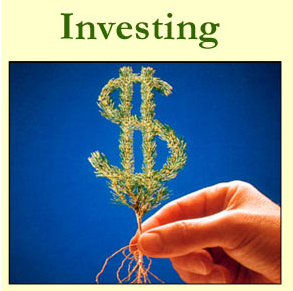
My Year of Hopefulness - My Best Investment

A lot of my friends and colleagues are talking about getting into the world of trading stocks for the first time in their lives. While they've invested in mutual funds, 401Ks, and IRAs, most of them have never actively traded stocks through a broker or services like e-trade or Sharebuilder. With the bargain basement prices on Wall Street, some of them are considering taking the plunge, at least in a small way. Heck, as of Friday, you could buy a share of GE for $7. That's less than the cost of a pizza! Why not give it a shot and see how it goes?

I completely understand where they're coming from. And their enthusiasm for this idea has had me thinking about doing the same thing over the last few days. I am in an extremely fortunate position during this recession, and I am grateful for it every day. So why not dip one toe in the turbulent waters of the stock market?


As I was cleaning my apartment this afternoon, I was having a monetary conversation with myself - this is what happens when you are the only source of both the income and expense in a household of 1. Should I pay off my student loans? (Much to my dismay I could not deduct a single penny of the interest I paid on them in 2008 from my taxes.) Should I save for a down payment on an apartment? (NYC real estate is going for historically low prices at the moment and unlikely to recover any time in the near-future thanks to the exodus of bankers and their salaries.) Should I just sock it away in cash for a to-be-determined investment? Should I consider the stock market? Should I continue to invest in my 401k since I no longer have a match by my employer?
After a while I talk myself in circles during these conversations and I end up right back where I started, which is usually without an answer. And then, one bright, shining thought surfaced to the top so clearly that I surprised myself.

Yes, GE and other large blue chips are down to a point where I could actually afford to buy a block of shares. Real estate has always been at least a decent investment.
However, the paradigm is shifting. While yes, we used to investment in big companies because of their stalwart nature, we are seeing them whither like never before. We are beginning to see the waste and excess that so many have taken as a given for decades. It is possible that there is a small business out there, a start-up, that would be a much better long-term bet in the new economy, and maybe that start-up is me. Let's face it - that age-old assumption of compounding interest rates at 8% to 10% may no longer be valid and these stocks that are so far down may actually be not only down, but out.

What is critical is my freedom, and my freedom will always be my greatest asset. This means that my best investment is me, and that means reducing anything that reduces my ability to be flexible at every turn. End of monetary discussion with myself, once and for all.

The image above can be found at: http://farm1.static.flickr.com/101/314770566_1b1cb0f796_o.png

Wednesday, February 11, 2009

My Year of Hopefulness - Marcus Buckingham Workshop Session 3: What is Strengths Training?

Most companies have just completed their annual employee reviews. There are few other times of the year that cause more anxiety and induce more fear at work. Does my boss really like me? What have I screwed up? And what is going, in black and white, into my file, never to be undone?

It's with good reason that many people feel this way. Historically, performance reviews focus on areas of improvement (aka - stuff we're not good at) rather than areas of strength (aka - our greatest assets.) Very slowly, that's beginning to change thanks to people like Marcus Buckingham who advocate for a focus on strengths. 

In session 3 of his on-line workshop, Marcus talks about his belief that focusing on strengths yields a far better outcome than focusing on areas of improvement. 72% of people feel an emotional high from their jobs once a month. Marcus pushes all of us to consider how we can go from once a month to all of the time. In order to get us there, he asks us to follow this plan:

1.) Bust the myths

2.) Get clear on what strengthens and weakens you, not on your strengths and weaknesses (though it's possible that those things could overlap). Most people think that someone else is a better judge of their own strengths and weaknesses than they are. This conclusion is logical because of the current structure of performance reviews at most large companies. Because we report to a boss in a hierarchy, that boss is traditionally given the authority to tell us what we're good at and what we're bad at, and judge us based on that. (This is taken as gospel regardless of the fact that our boss may be less educated, less experiences, and not as talented.) Marcus thinks this is crazy - people with at least an average level of self-awareness (which is nearly everyone) is very conscious of what their strengths and weaknesses are and is the best judge of them. That's why it's often an interview question! In performance reviews, we too often hand over the power to define us to someone else. 

3.) Plan your strong week. Do things that invigorate you, not drain you, as often as you can. Almost every job has elements that we don't like but are necessary. Tilt the floor to fill up as much of our time as possible with the activities that invigorate us. This is called strength training.    

Sunday, February 1, 2009

My Year of Hopefulness - What to do with that $18 billion bonus

There's a lot of buzz about the $18 billion that financial firms paid out after requesting and receiving TARP funding. Both President Obama and Vice President Joe Biden were outraged and very vocal about their opinions on these bonuses - they don't like them. My friend, Jon, has a close friend at one of these financial firms. She just received her bonus in her paycheck this week and has been grappling with a lot of guilt for having it. 

After months of watching her friends be escorted out of the building following round after round of layoffs, she's not sure what to do with this money. She spoke to her boss about the ethical dilemma she's having with this money and the conversation was met with confusion, anger, and frustration. She tried to ask some co-workers about it, and she found little support for her beliefs. At a recent company meeting, she raised her hand and asked about the justification of the bonuses when the company had asked for and taken so much taxpayer money in the past few months. Again, no fruitful conversation. No one had an answer to her question, and no one had any interest in even listening to her concerns. 

As always, Jon listened patiently to his friend and considered her options of what she might do with this bonus money:
a.) she could give it back, though given the lousy track record of the bank's management in recent months that doesn't sound like a good idea
b.) she could donate the money to a nonprofit
c.) she could just keep it and get over her guilt. This is unlikely - not her style
d.) she could invest it in her own future in a way that would help others 

D. - invest it in her own future was the choice that intrigued her the most. For quite some time, she has wanted to start her own company in the social entrepreneurship space. Her bonus check is large enough to be the seed money for this new venture. Of all the ways to use this money, she felt that one would have the greatest return for the largest number of people. 

This story was a great lesson for me. Jon's friend was beating herself up over this money when a better use of her energy was right in front of her. She just needed Jon, with his outsider perspective, to point her in the right direction. There is always a way to do good.

Monday, January 26, 2009

My Year of Hopefulness - Marcus Buckingham Workshop Session 2: Where Are You Now?

A few weeks after we went through the introductory session of Marcus Buckingham's on-line workshop, I finally sat down to go through session 2. Why such a gap right? Schedules, yes, but there was a larger reason to. Fear - fear of finding and discovering something new and different. Fear of change. 

Sometimes it's easier, at least in the near-term, to bury our heads in the sand and pretend everything's fine. That no improvements can or should be made. Change is painful, though it's so necessary in the long-run. Progress requires giving up the familiar and that brings with it a certain amount of anxiety. No time for dallying now - we had to jump in and get on with it. Change is coming so we might as well greet it politely at the front door rather than waiting for it to huff and puff and blow our house down. 

Session 2: Most people believe that when we consider our performance in life that we will become better people if we focus on improving our weaknesses. Marcus has a fundamentally different view. His advice is to build on our strengths and manage around our weaknesses. A meager 12% of people spend the majority of their day playing to their strengths. He's willing to give you from 8am - 11am, 25% of your day to play to things we aren't good at. And then the rest of the day must be spent on strengths.

In our society, we believe that if we study and learn about negatives, we will glean some miraculous insight into the positives. We study disease to learn about health, depression to learn about happiness and joy. There have 40,000 studies done on the topic of depression and only 400 on joy. The equation and our focus on weakness and negativity is sadly and badly tipped in the wrong direction. "You study "bad" and invert it, you don't get "good". You get "not bad." And "not bad" is not good enough. It won't give us energy. It won't make all our hard work worthwhile. And it certainly won't make us happy. 

There are a lot of people out there right now who hate their jobs. Even though they're grateful for the income with all the layoffs going on, they hate what they do. And that's the key. The three questions to ask ourselves when examining our jobs are:

1.) Why is this job important to me?
2.) Who am I going to be working with?
3.) What am I actually going to be doing?

When the "what" goes wrong, it effects the "who" and the "why". So in these times when we may be looking for a new job, the question to ask is the "what" question.  To help answer that, it's best to take a look at what invigorates us and what drains us, and then go for what invigorates us.

Thursday, January 22, 2009

My Year of Hopefulness - Don't Be Less

Just when I thought life at work couldn't get much worse for my friend, John. Goodness....I couldn't make this up. I don't think the best fiction writer on the planet could make up the following story. My thanks to John for allowing me to share his experience with this blog's readers:

On Thursday morning, John woke up at an ungodly hour to catch a flight for an all-day business meeting. He arrived back to the airport later that evening with his boss and found that their flight was delayed 3 hours. His boss thought she'd take the time to provide him with some feedback on his performance. Here's the abbreviated laundry list that she expounded upon for 1.5 hours:

Too motivated
Communicates too well too often (Her quote to him, "Jesus, I'm not your texting buddy." My advice to her - then stop replying for one thing, and don't complain when you're in the dark on details, which is true just about every day.)
Has too good a relationship with senior management (a.k.a., "I feel threatened that people like you so be less likable)
Too ambitious
Takes too much responsibility and ownership for work
Too collaborative with people outside of department

Ouch - I don't even know where to begin on how pathetic and foolish this feedback is. Essentially John is supposed to be less of a person than he is because it makes others uncomfortable to be in the presence of someone who is talented and hardworking. This is gross - I'm so furious by these comments that I can barely speak. 

Being a pro, or numb from exhaustion, John took the entire conversation in stride and stood his ground, politely. His only response: "This is so odd. No other company that I have ever worked for, or even heard of,  tells its people to be less collaborative and less motivated." And that's it. He let it lie. Didn't agree, didn't really say much of anything. He was too shocked and confused. 

Here is my advice to John and anyone else in this situation: you are NOT to compromise your integrity. Ever. For any reason. You are not to be less of a person to make others feel better about themselves. Their laziness and lack of motivation is their problem, not yours, so don't take it on, politics and "business as usual" be damned. Your job is to shine as brightly as you can and add value to the people and the environment around you. That is your only obligation, ever. Smile, hold your head up and be proud of yourself. And write down all the things you are and are not. Keep the list handy and refer to it often. 

If President Obama has taught us anything it is that the time for change has come. Throw off the yolk of being what to do when by people who want you feel less empowered so they can feel more powerful. The feudal system died out centuries ago and there is no chance of resurrection. This is the time of the individual, and don't let anyone tell you differently. 

Wednesday, January 14, 2009

My Year of Hopefulness - Change of Behavior

In my quest to cultivate more hope for myself and for others, I have recognized that there will be set-backs and that those set-backs will create opportunities for learning and reflecting. I had one of those moments today. Or rather, a friend of mine relayed a story to me that set my hope back a bit. 

John, my graphic design friend, deals with a tough work situation. Right before Christmas, he was really in dire straights. He was very discouraged by an abusive and unappreciative boss, and given the economy his prospects for leaving are bleak. To his surprise when he returned after the holiday break, his boss was different. Kinder, more appreciative, more team-oriented. For a week and a half. And today his boss flipped the switch. 

For a week and half, John was more hopeful about his job. Maybe things would be looking up for him and his team. And then it all unraveled and John felt like it was December 18, 2008 all over again. 

The lesson here is that no behavior change, positive, negative, or indifferent, is immediate. No one comes back to any situation with a completely new attitude. Behavioral changes take time and patience and practice. In all likelihood, John's boss's behavior is not going to change overnight, or over Christmas for that matter. I only had one piece of advice for him: take the long view. 

For him, this is a stable job in a tough economy and it's a good resume and portfolio-builder. This tough time will pass and we will be better people for persevering. At least that's what I tell myself - it's what I have to tell myself. Sometimes hope, unbridled, unreasonable, unreliable hope, can be the only thing we have. And sometimes, that's enough. It has to be enough because it's all we've got.  

Wednesday, December 31, 2008

My Year of Hopefulness - Day 1

On December 23, 2008, I began a daily log of acts of kindness after writing a blog post about small moments that made my day. I realized in the 15 minutes that it took me to write that post that I had a very simple New Year’s Resolution: I wanted to feel more hopeful in 2009 and I wanted to do my part to generate more hope for others. From that blog post and simple wish, I am starting an extraordinary year of giving and receiving.

I don't typically write series of articles on this blog. To help me keep my New Year's Resolution, I will be writing a daily blog post, in addition to my other regular posts, about what I am doing to be more hopeful and generate more help for others. It will be a good reminder to me, and I hope that it may do readers some good as well. 

The economy is weighing heavily on people's minds at the start of this year. People are facing layoffs and possibly the bankruptcy of the companies they work for, particularly in certain industries such as retail. As a result, it can be pretty tough to get up for work in the morning. Even if you are lucky enough to keep your job in this downturn, and you are indeed lucky if you're in that boat, there will be added stress as you may be doing the work of two or three people, and being asked to do that work with no additional compensation or resources. 

So what can we do to make that trip out the front door a bit better? This evening I made up a small sign that I taped to the inside of my front door, right by the door knob, that details what I am achieving and working toward at this current job and the good things about my position that I should be grateful for. It will be a good reminder every morning before I head out for work. If you are facing some discomfort in your current job, maybe this tactic will help you as well. 

Happy New Year!

Tuesday, December 30, 2008

Attaining breadth and depth

The conversation of breadth versus depth has always confused me. I have a hard time understanding why the two seem to be mutually exclusive of one another. Is it not possible to know a lot about a lot of things? A similar debate rages on about being a generalist versus a specialist. Again, why can't we be both? 

There is a widely-held, and incorrect, assumption that we as people do not have the time nor the capacity to be very good at many things. I constantly hear statements like "if you want to hone your craft, you really need to make that your singular focus." Nonsense. If we are curious and passionate learners, open to new experiences, and diligent in our studies (even long after our formal education is over), then it is entirely possible to be very good in many different areas. 

The paradigm is shifting. In the work world we are being asked to do more with less. And if that is to be expected and accepted, then we must also give up these debates of generalist versus specialist, breadth versus depth. We will have to develop high level skills in a number of areas in order to perform well in the new economy that will emerge after this current downturn. The idea of the "T" is no longer valid (knowing a little about a lot, and a lot about a little.) We will have to get to work on building a rectangle (knowing a lot about a lot, period.) 

Look at historical figures like Benjamin Franklin and Thomas Jefferson and Albert Einstein. They were considered "Renaissance characters" of their times. They had a variety of interests and far-ranging expertise. Really, they were just life-long students who didn't accept the adage that they could only excel in a single field. They had the drive to let their curiosity be their guide, and we would do well to follow their lead - now more than ever. 

Monday, December 22, 2008

Getting What You Can From What You've Got

My friend, Lon, sent me an article from the Financial Times last week regarding employee satisfaction. For most of us, we can forget it for the near-term. Either we're being let go or our friends are. Either we're dumping all of our work on the people left standing at our companies or we're the ones left standing doing the work of three other people. It doesn't feel good to be on either end of this stick. There aren't any winners in the job satisfaction game these days. 

So what are we to do? Hide under our desks or under our beds and wait for sunnier skies? It's tempting but I wouldn't recommend that. If you have your job, and even if you hate, there's a way to make the best of what you've got. My friend, Kelly, came in to town recently and I was talking to her about this subject. No matter how nutsy her job gets, she always has a positive perspective. It's a little sickening actually. She was my friend in graduate school who could listen to the most obnoxious student go on and on about nothing and be searching for what she could learn while the rest of us were banging our heads against the wall out of frustration. 

How does she do that?? How does she always see the best in her job situation, even though her company, and every company for that matter, is going through tough times? This isn't the end game for her and she knows that. Her real passion is education, but she wanted big company experience first so she could bring something to the education party that would be beneficial. Consequently, she takes in all of this good learning she has all around her, the good, the bad, and the ugly, and is able to distance herself emotionally because she knows these crazy times will inform her education career when she's ready to make that change. Brilliant, huh?

So while having a drink last night with my friend, Linda, I was talking over this POV. I'm 32 now. Where do I want to be when I'm 35 and how about when I'm 40? And if what I'm doing right now isn't what I want to be doing then, how can I utilize the experience I'm getting now to inform my future? And what other skills can I pick up from where I am right now to help me on my journey? Lord knows there is plenty to do these days at work, not enough people to do it, and plenty of room to take on more if we so desire. Perspective, and the wise advice of good friends, is worth its weight in gold. 
      

Sunday, December 21, 2008

Trust and learning in a time of change

"But never forget ... our mission is to recognize contraries for what they are: first of all as contraries, but then as opposite poles of a unity." ~ Herman Hesse

There's a lot of tension flying around companies at the moment. This holiday shopping season, and the financial results it generates for companies, will lead to some potentially scary decisions in January. If you feel everyone holding their breathe until the new year, you're not alone. The pressure and fear is immense and wide-spread.

This morning, I read my Daily Good email that highlight a Harvard Business Review article about trust in a time of extreme mistrust, and leading change in a time of change - both incredibly difficult things to do and quite frankly two things that many managers are not good (although they don't always know that but their team does.) For example, some managers think they're change agents simply because they question everything. The fine line that separates change agents from managers who only ear what they want to hear is how they ask the question and what their end-goal is. A change agent wants to examine possibilities, dig in to the issue, and examine detail in an effort to fully understand the issue at hand so a collaborative solution can be found. They take a balanced approach. 

Managers who hear only what they want to hear, also ask a lot of questions but ignore any of the details of what they're asking for. These are the "I don't care what it takes, just make it happen" managers. They will steamroll over their people, squeeze change out them, and then sit back quite proud of themselves of how they've transformed the group. Unfortunately that transformation came at the group's expense, not to their benefit. And if you have one of these managers, I am very sorry. Truly. I know where you're coming from and so do most of my friends. You are in a no-win situation because there is no reasoning with that kind of manager. Your leader doesn't have balance, and without balance that person cannot lead effectively, much less mentor you.  

So what can you do? Reach out, way out, in your organization. Extend the olive branch at every turn, whether the person is in your group or not. Take this time to expand your network - you'll feel better meeting new people in your organization that may have nothing to do with your job now, but could in the future. You can find solace in partnership, strength in unity. And that solace and unity is what's going to get you through this economic bust. 

The other thing you can do is focus on the learning, not the bad behavior your fearful manager is exhibiting. Bob, one of my former bosses, gave me this counsel and I think of it all the time. He would say that no matter what happened to him in his career, good or bad, he knew it was all good learning and it made him a better person and a better manager in the end. Take this time to think about how important it is to build trust with the people you work with and for, and go out and exhibit that trust while also relying on your skills and ingenuity that will help you persevere. It's a tough road, I know, but at this point it may be the only way forward.   

Wednesday, December 10, 2008

Is this the end of hierarchy?

With the current economy, the only case for hierarchy might be in the military. Have you ever wondered what a Senior Vice President General Manager Grand Pooba Chief of Everyone does? Me too. Who is making up titles this long and complicated? Companies too large to get out of their own way. 

The more I talk to my friends about their jobs, the more I hear the exact same frustrations continuously. "Not able to get anyone "of power" to listen to my ideas." "Tired of feeling like I don't count because I'm not a high enough rank." "Why do 18 people need to approve every small decision we make?" "Why is everything SO SLOW here?"

There are many reasons for this commonality in their frustrations. It could be because many of my friends are on that cusp of being young though with enough years of experience under their belt to make bigger decisions than their titles "allow". It could be that my friends are much smarter and more worldly than their bosses. It could that they're all having a bad day - at the same time. 

The real reason I think they're getting irritated is because the rules of the corporate game have changed and no one told their bosses, or their company CEOs for that matter. Seth Godin talks about industries as ecosystems, meaning they are dynamic. The rules change all the time, meaning corporate cultures need to change all the time. Adjustment, constant adjustment, is the name of the game. What worked for companies 10, 15, 20 years ago won't work today. This is a brand new world. And it requires an intense curiosity and desire for growth that will keep today's established companies relevant; without curiosity and growth they will be obsolete in the blink of an eye.

So what can big corporations do? Are they doomed? No - they just need to flatten out, especially at the top. A friend of mine recently attended a corporate training session and the trainer said that whenever they encounter a senior leader they need to look at their feet and let that leader run the whole conversation. I almost got sick. Who wants to work for an organization that not only doesn't value youth, but does its best to make its young people feel insignificant? If corporations want to hang on to young people, they better learn to how to utilize their energy and ideas, quickly. Flatten out and give everyone at every level a chance to participate!

And for my friends who are frustrated with corporate rigidity? A few suggestions: think about branching out to try a new venture, maybe not for pay, but for peace of mind - for hope of what may pan out down the line. Offer your services to a start-up, or try something new like a language class that could have professional value in the future. It's also powerful to gather the experience you can from where you are for however long you're there. We all always have something to learn from whatever situation we're in. Make sure to capture those learnings and take them with you when it's time to give yourself a fresh start.      

Saturday, December 6, 2008

We're going the wrong way! Who's driving?

My friend, Jamie, was was telling me about a his sister's job in retail. It's an industry I'm passionate about and may return to someday. It's the heart and soul of the 70% of our GDP created by consumer spending. They're hurting, like so many industries, and in times of trouble companies need the most able navigator at the helm. The trouble, at least with Jamie's sister's company, is that everyone is playing a game of Pass-the-buck instead of Survivor. The answers to questions like "Who is our core customer?", "How are they hurting right now?", and "With our competencies how can we ease that hurt for them?" are critically important for companies that wish to come out the other side of this latest economic slide, or any economic slide for that matter. 

Jamie drew a metaphor that is so clear in my mind and it perfectly captured the situation with his sister. It's as if everyone is in the back of the bus, facing the wrong way, and asking where we're going. No one, no one is actually willing to grab the steering wheel and drive. That driver's seat is a very dangerous place to be for sure, though sitting in the back, eyes covered, knowing no driver is up there steering is far worse. It's a choice of the lesser of two evils, with advantages and disadvantages for each action. 

Let's look at hat's actually happening for Jamie's sister - no one's driving. A crash is practically unavoidable. A runaway car with no driver can only stay on the road for so long. The people in the back may feel that they have a better chance of survival if they hang out and wait for someone else to step up. That's possible. Though the greater likelihood is that the whole operation goes down while everyone is wringing their hands. And the lead up to the crash is painful and anxiety-inducing. 

An alternative is that someone does take the helm, and the crash happens anyway. It would be a near certainty that the blame and guilt will fall to the driver, and that driver couldn't hope to survive. But what if that driver can pull it off? At this point, it's hard to imagine any industry coming out of this recession unscathed. With the right leadership, the wounds could be bumps and bruises instead of lost limbs and massive internal bleeding.

It's a gamble - there are clear choices that need to be made now by every company. What's not clear is the best way forward that causes the least number of casualties. Strong leadership that focuses on stakeholder needs now is best able to find a way up, over, or through. At this point, we have to ask ourselves a key question about that bus situation: If we had no intention or desire to drive, or at least take a shift at the wheel, then why did we get on the bus in the first place? It's foolish and downright dangerous to leave an entire journey up to everyone else. 

Monday, December 1, 2008

Ladies Who Launch

I am in the midst of reading the book Ladies Who Launch. It's part guide book, part inspirational story collection for women interested in entrepreneurship. In the uncertain times we're now in, I'm thinking a lot about diversification. Traditionally, we get a job, we work hard, and pay for life from the salary of that job. In times of recession, which just today economists officially figured out we're in, there's a lot of talk about the importance of diversity in our investment portfolios. But what about in the ways we take in money. Isn't it safer, and perhaps even advantageous, to have multiple sources of income? Companies diversify their products and services. Shouldn't we, as average earners and consumers, do the same?

This book is about helping women to think about launching as a continuous pursuit. And that launch can revolve around a business idea, a project (personal or professional), a relationship. It draws its strength from encouraging women to get out in the world and stay active. I was a little skeptical at first, though I put my best foot forward and dove into the book after reading so many good reviews. 

After making notes throughout the afternoon on Sunday and considering questions like "What do I want my typical day to look like?" and "What would I do if I had no limitations and boundaries of any kind?", I noticed that my step was a little lighter today. The things that may have upset me on other days didn't phase me at all. And I noticed that I was bolder than normal, speaking my mind and sharing my views of even the most staid and traditional ways of doing things. 

There really is magic in thinking about ourselves as the CEO of Me, Inc. To think of our lives in a constant state of launching. Oscar Wilde said, "We are all in the gutter, but some of us are looking at the stars." While I don't think of my life as "in the gutter", I understand his point. We might feel down-trodden by the news of recession, by the political situation around the world, by the violence and sadness that stretches across the news waves these days. This idea of launching, of taking flight, has the ability to lift us up. It empowers us and allows us to retake control of our lives. The very thought of launching allows us to let what ails and pains us to fall away. We begin to look at the opportunities before us rather than the challenges. Or better yet, we suddenly become able to look at the challenges and launch opportunity from them.          

Monday, November 10, 2008

A victory for generalists

Change at a fast pace can be disconcerting. 2 years ago, I was in the middle of my second (and last) year of graduate school. I knew I'd be doing an off-grounds job search, and my only criteria for my next employer was that I be treated with respect and be in New York City. Beyond that, the options were endless. I was grateful for a (seemingly) strong economy that allowed me to take my time to find the right match.

I was exploring a myriad of options, networking with alum in all stages of their careers and in different industries. I was explaining to one of my career counselors that I really enjoyed having a job where I wore a number of different hats. He looked at me quizzically. He is one of those people who really prefers to file people into neat little boxes. Needless-to-say, I cannot be confined to a neat little box of any kind when it comes to my career. (Mind you, this career counselor convinced the majority of my classmates to become investment bankers and management consultants and we see how that story's gone in the last few months...) After I explained my varied work experience to him and employment possibilities I was considering he said to me, "Well, Christa, eventually we all have to decide what we want to be when we grow up. We can't stay generalists forever." Little did he, or I, know that being a generalist is just about the best thing I could be in the job market that would exist 2 years later. 

I walked away feeling a little badly about myself and my life. Maybe I was aimless; maybe I was like one of those little kids raiding her mother's closet and wearing grown-up clothes that are 5 sizes too big. I was masquerading as a grown-up, with no intention of actually ever growing up. I am happy with my own special brand of optimistic realism. Fittingly, I went to work for a toy company right after graduation whose motto is, "I don't want a grow up. I'm a ...." You get the idea. I found my place in the world being exactly who I am.

Surprisingly to that career counselor of mine, though no to me, being a generalist is what is savings me (furiously knocking on wood) right now in this economy. My broad-based experience is allowing me to play many different roles on one stage - I can do whatever task needs to be done at the time it needs to be done. And that's true of many people I work with. It also happens to be true of President-elect Obama - his broad-based experience allowed him to speak genuinely to people from many different walks of life. His honesty, humility, and ability to emotionally connect with so many people and bring them together played a large part in his victory. It also helps that he's brilliant, confident, and capable. He is a generalist at heart. 

This week, my Penn alumni magazine ran an article by President Amy Guttman entitled "A Pitch for the Uncharted Path" that described her speech at this year's convocation. Like me, she meandered across a whole host of disciplines as an undergraduate, stopping to inspect anything and everything that interested her. And now she is Penn's President, a job that could only be filled by a infinitely-curious generalist. She encouraged the newly matriculated class to be open to the possibilities that will be set before them in the coming four years. Being a person who has wanted to be everything from a champion dog breeder to an astronaut, I whole-heartedly agree. 

Our world is complex, and to get into the thick of it and make a positive impact, we have to appreciate every shred of that complexity. The best way to gain that appreciation is to live our lives in many different directions, on many different planes. Yes, this is a time that "a genius wants to live." And it wouldn't hurt if that genius also moonlighted as a generalist. 

Sunday, November 2, 2008

Quelling financial anxiety

This morning the New York Times ran a great article on quelling the financial anxiety that is running rampant in this country. They interviewed Margaret Wehrenberg, a clinical psychologist in Naperville, Ill., and co-author of “The Anxious Brain.” That's the permanent state of my brain: anxious. What a perfect article for me to read. According to Dr. Wehrenberg, I'm using my anxiety wisely: to prepare for anything. There is power and empowerment in action. Use the anxiety as fuel to get going.  

When I graduated from business school, I didn't have a signed job offer in-hand. I had turned down several because they weren't the right fit, and in the Spring of 2007, it was okay to do that because to economy was cranking along at a good clip. You could even negotiate a job offer. How quickly times have changed! I have friends who would take anything reasonable at this point, including a significant cut in pay and title, just to be working in their chosen field.  

I got a great job offer in June of 2007 but not before I had completely run out of money. I had to take a cash advance on my American Express Card and incur a finance charge - the only time I have ever had that happen in my 12 years as a card member. I read two books by Suze Oreman and have followed her advice to the letter. Since then, I have been on a diligent savings plan. Tax refund? Banked. Sale of car? Banked. One day of wages per pay period? Banked. I have set up automated funding into into my savings account every month and have been working to save 8 months of very modest living expenses. I started these habits when times were good, and now that times are not-so-good, these habits are easing my anxiety-prone mind.

So I'm in my apartment this morning, waiting for CBS Sunday Morning to start, drinking tea, eating granola, and battening down the hatches, or at least planning to. I love my job and am very happy to have it. The job losses of so many of my friends is weighing on my mind, and to remedy that, I feel like I need to consider what life would be or could be like if I were in their shoes. We all need to do that in this economy. So here's the plan:

Update the resume: keeping it fresh is something we should be doing all the time, regardless of the job market. It needs to be ready to go at a moment's notice. Update it on Linked-In, and any other on-line source you feel is appropriate.

Get out there: networking is a continuous activity. It's much easier to establish and refresh a network when you aren't looking for something, and then the network is there to tap when you're in need. Keep your name out there, and let your contacts know what you're up to.

Get your would-be action items in order: I am a list maker. I love lists of any variety. I'm working on several this morning - key contacts, brands I am passionate about (more to come on that in a later post), and job sources.   

It's rough out there and these are uncertain times. The best defense is one that is all-encompassing. We all want to feel safe and secure, and if this economy has taught us anything it's that security is self-made. As Ani DiFranco sang, "Self preservation is a full-time occupation."